Photographers are always chasing fresh perspectives—but this time, I didn’t just change my angle, I completely flipped the rules. During a golf-themed shoot, I turned my light modifier into something it was never meant to be: the view from inside the golf hole itself. Here’s the story (and the shot) that came out of it.
This last year, I have been trying to explore different light modifiers that I rarely incorporate in my lighting setups or modifiers that I've never used before at all. It's become a personal challenge, and it's served as a way to spice up the lighting. Nothing keeps you on your toes more than forcing yourself to light with a modifier you don't attach to your strobe every single day. For this last year, that light modifier has been different varieties of hard reflector dishes, specifically the Profoto Tele Zoom Reflector White and the Magnum Reflector White.
What Is a Reflector?
For most photographers, the easiest and most forgiving lighting style is soft light. Soft light is achieved when your lighting source appears much larger than your subject and is often replicated with flash by placing a large softbox or octabox on your strobe. The theme for this month's Fstoppers Contest is Soft Light, so definitely check out those entries if you want a bunch of examples of soft light.
A reflector dish creates lighting on the complete opposite side of the spectrum. Instead of creating soft, overcast lighting with gentle shadows and highlights, the reflector dish creates a relatively small light source that produces sharp shadows and punchy highlights. Why would anyone want to create deep shadows and sparkling highlights, especially when photographing people? Unlike soft light that keeps all of your tones and colors looking gentle and subdued, the hard light created by a reflector dish allows the tones and colors in your photo to be more vivid, contrasty, and eye-catching.
We see this naturally with landscapes. When the sun is behind a cloud, we can see detail all through the landscape in front of us, and the tones are all subtle, soft, and easily rendered by the human eye. However, when the sun is unobstructed and firing directly on the entire scene, many of the shadows go pure black while the brightest parts of the scene become blinding. The colors are much brighter and more saturated, and the entire landscape seems to pop out at us.
What Is the Tele Zoom Reflector?
When you first start exploring the world of hard light, it can be overwhelming trying to understand exactly how different reflector dishes affect your lighting. The shape, size, and throw of a reflector dish can all affect the overall quality of the light, and some affect the light in a subtle fashion while others are pretty drastic. The lighting company Profoto probably makes the largest number of hard light reflectors on the market, and since I used Profoto strobes, I often experiment with new modifiers to see how the might affect my photography. For over a decade, my favorite and most used reflector is probably the simplest: the 7" Zoom Reflector.
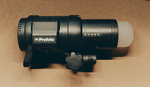
Earlier in the year, Profoto sent the Fstoppers office their new Tele Zoom Reflector in White. Unlike my modest 7" Zoom Reflector, the Tele Zoom is a beast of a reflector dish. It measures a whopping 16.5" long, and instead of being 7" in diameter, the Tele Zoom is over 13" wide. Why would a reflector dish ever need to be this large? The simple reason is to keep the light focused so it can illuminate a subject further away.
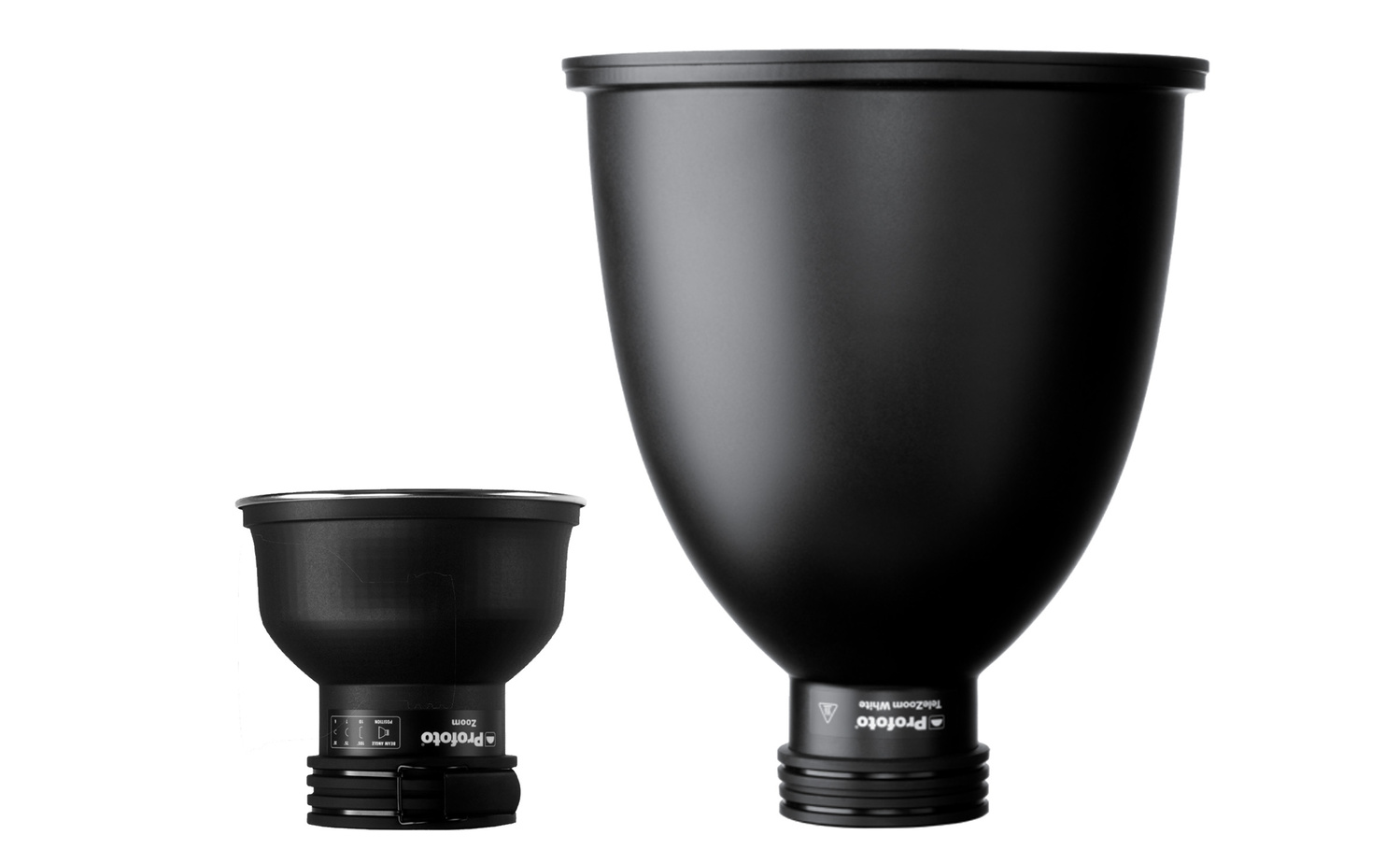
I'm no expert on this lighting modifier, and I'm still learning exactly how I like to use it in my own shoots, but the Tele Zoom was designed specifically for sports photographers who want to light up their subjects from far away while still maintaining the maximum amount of usable flash in bright lighting situations. If you've ever tried to use flash in a bright midday scene, you are probably well aware that as you move your flash further away from your subject, the effect of the flash starts to diminish. In a darker scene, this isn't so much of an issue because the flash is so powerful, but when the bright sun is illuminating your scene, your flash often has to be very close to your subject to effectively light them. When you are photographing extreme athletes, however, placing your strobe lights close to the action isn't always practical or acceptable. The Tele Zoom was designed to throw as much light forward, in a concentrated beam, so you can still effectively light your subjects at a safe distance.
How I Wound Up Using The Tele Zoom
A few months ago, I found myself shooting some golf themed photos at our local neighborhood golf course. With Puerto Rico being much closer to the equator, both the midday and late afternoon sun can often be extremely bright, which is always a challenge photographically. Since I knew I wanted these photos to showcase both Brittany Lorelle, the model from the pro shop, and Puerto Rico's massive El Yunque rainforest in the background, using a hard light modifier was a great choice for this photoshoot. Instead of packing my all too familiar 7" Zoom Reflector, this time, I opted to use the Tele Zoom White which I've used far fewer times.
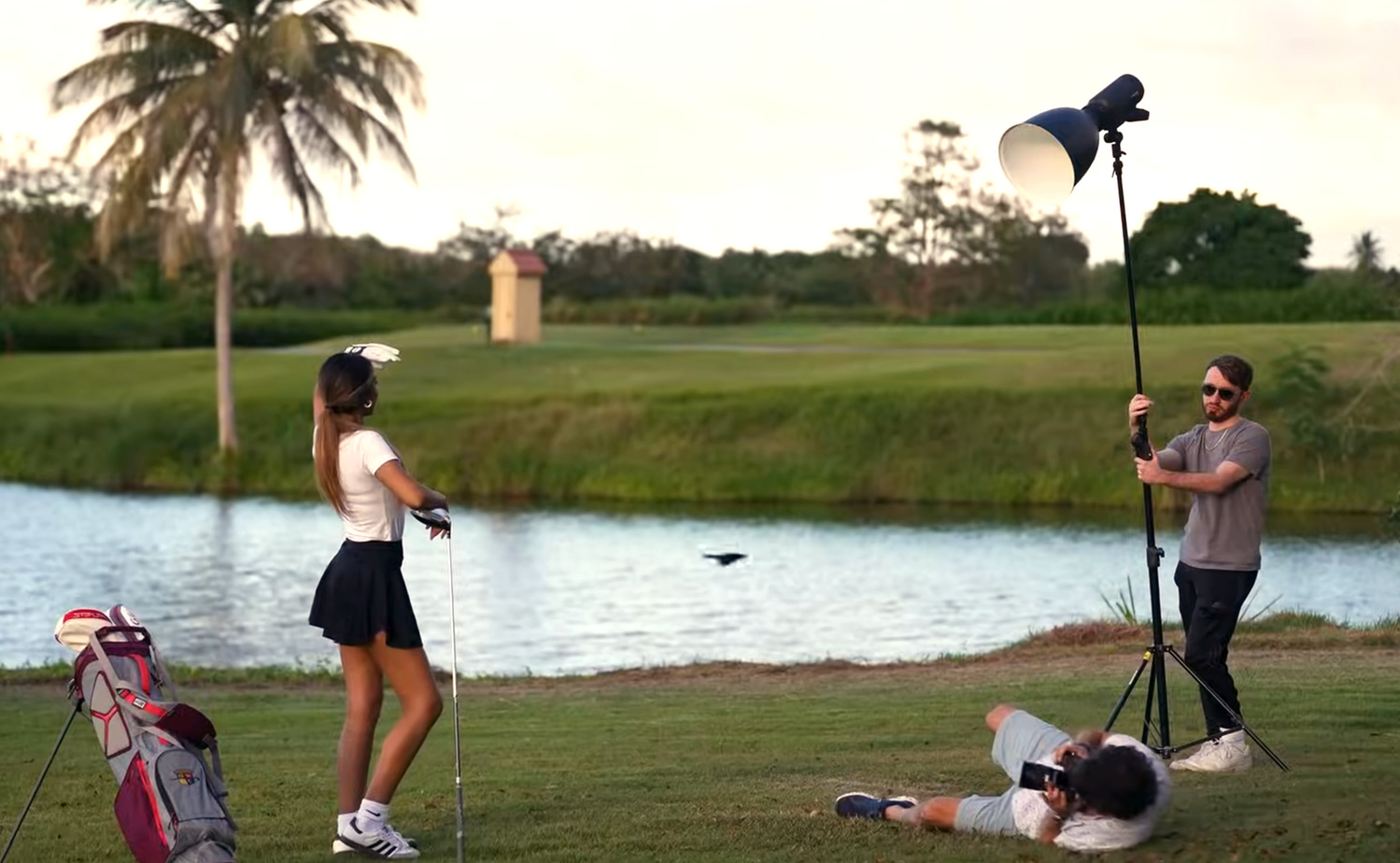
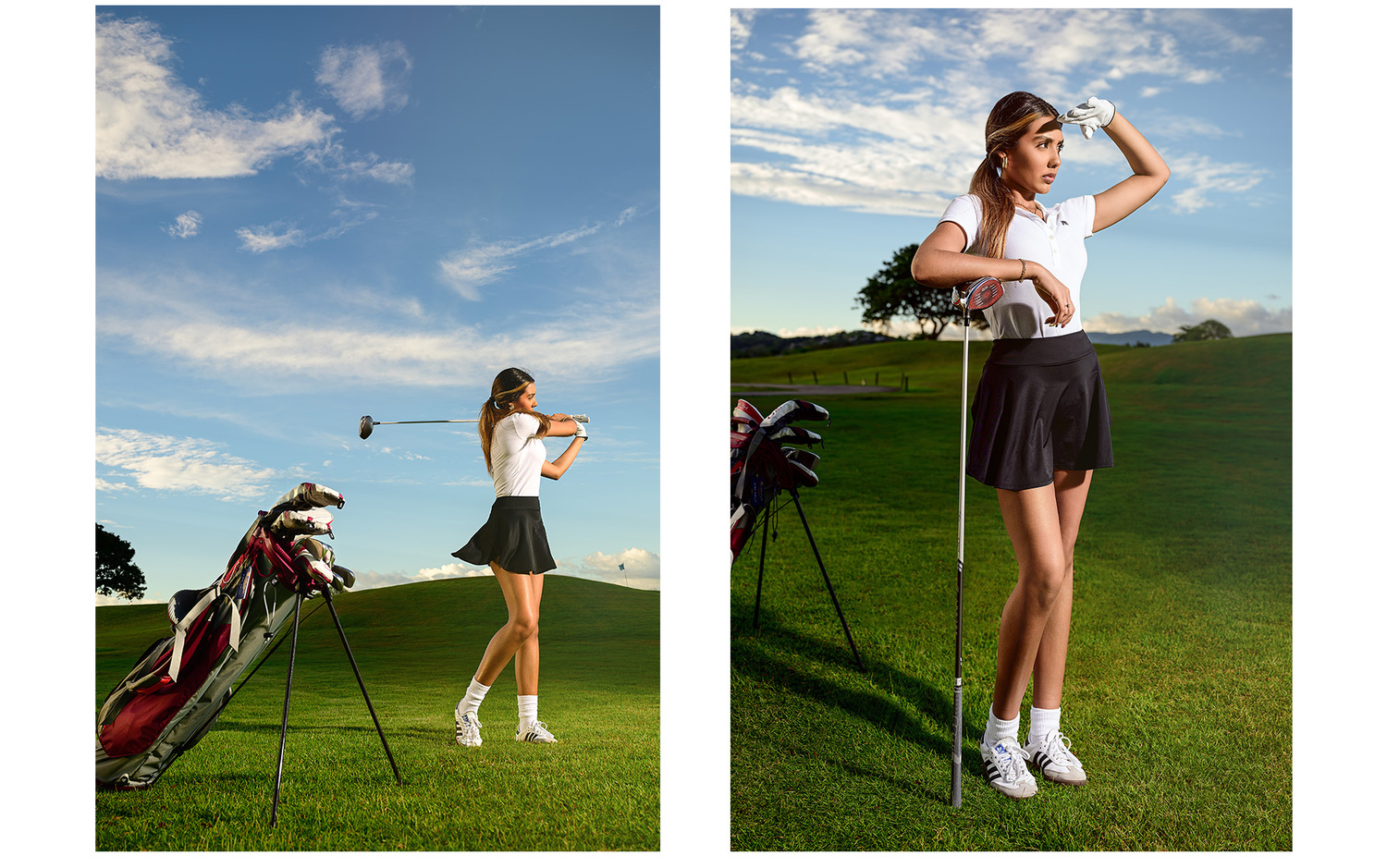
You can watch the entire photoshoot in the featured video above, but I'll give you a quick rundown in this article as well. For the first image, the goal was really to showcase as much of the greens as possible while simultaneously showing the exotic tropical location. Since the sun was still fairly high up in the sky, the entire scene was being lit with fairly harsh light from the left side of the frame. In order to light my golfer in a realistic way, I wanted to place my Profoto Pro-B3 strobe on the same side as the sun. With the Pro-B3 light on camera left, I then positioned the Tele Zoom so that the focused beam of light would hit Brittany at the perfect angle.
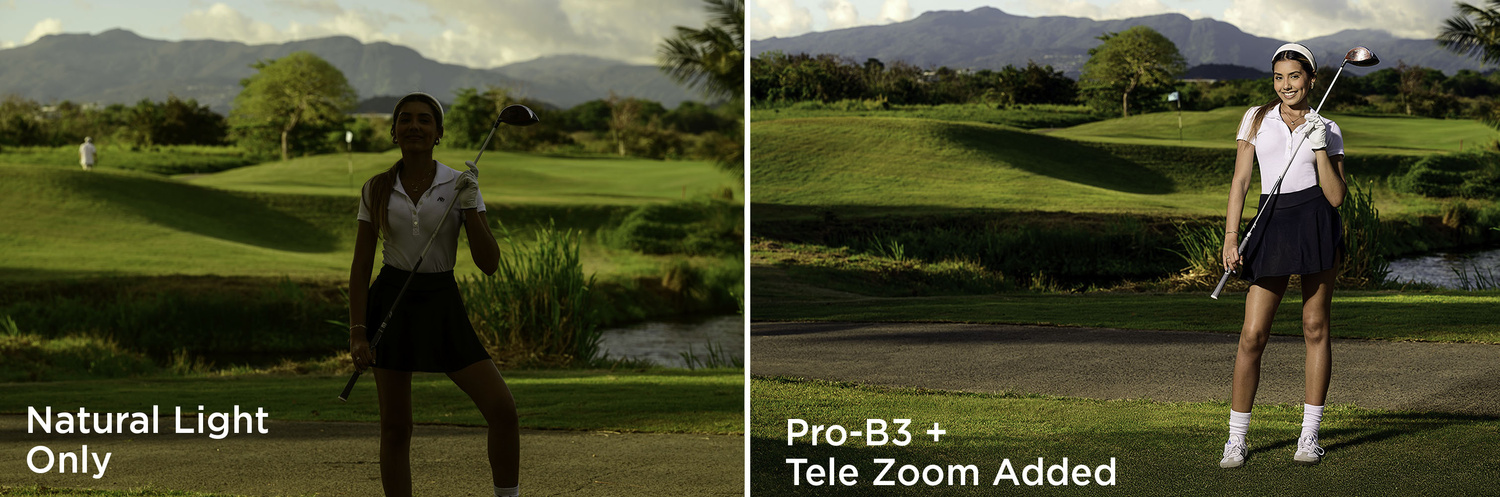
The above images show how much of a difference adding a strobe can make to your photography. The first image shows what the natural light alone would have achieved, while the second image allows both the naturally lit background and our model to be lit perfectly.
For the next set of images, I wanted to create a few frames with more of an editorial feel. The goal was to portray the entire experience of playing golf at Palmas Del Mar by showcasing the greens, the clothing, the golf clubs, and the joy of playing at this elite club. I also wanted these images to appeal to a younger demographic that might be looking for other golf courses on the island.
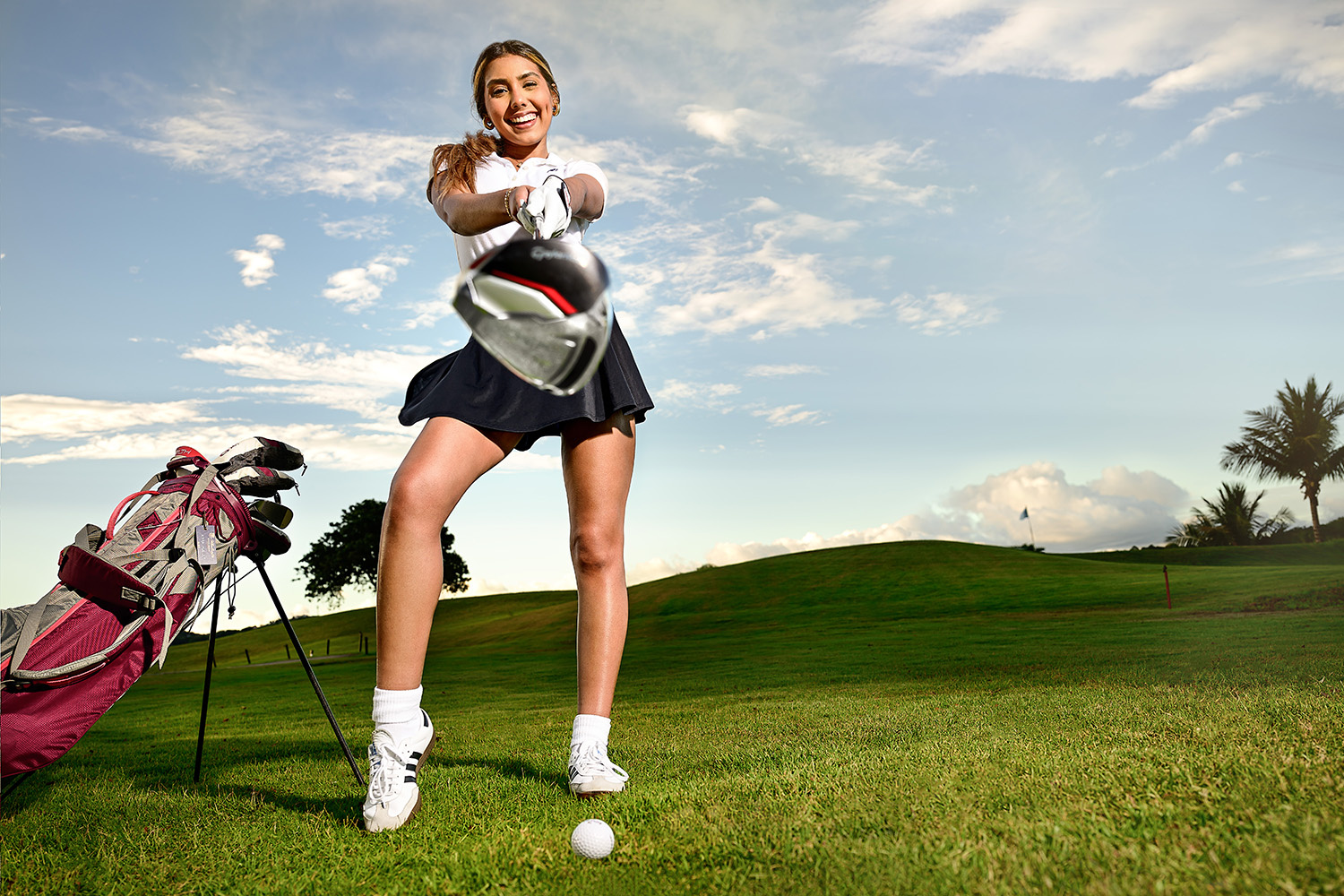
The lighting for this set of images was designed with a completely different aesthetic in mind. Instead of trying to replicate the same lighting direction as the setting sun, I went for a more fashion or athletic lighting style by placing my Pro-B3 to the right side of Brittany and letting the natural sunlight light her from camera left. This cross-lighting style creates a hyper-realistic feel and allows my strobe to light the model from the opposite side of the natural light which creates a less realistic, but more dramatic lighting style. For all of these shots, the the single flash was modified using the Tele Zoom White and placed opposite the sun on camera right.
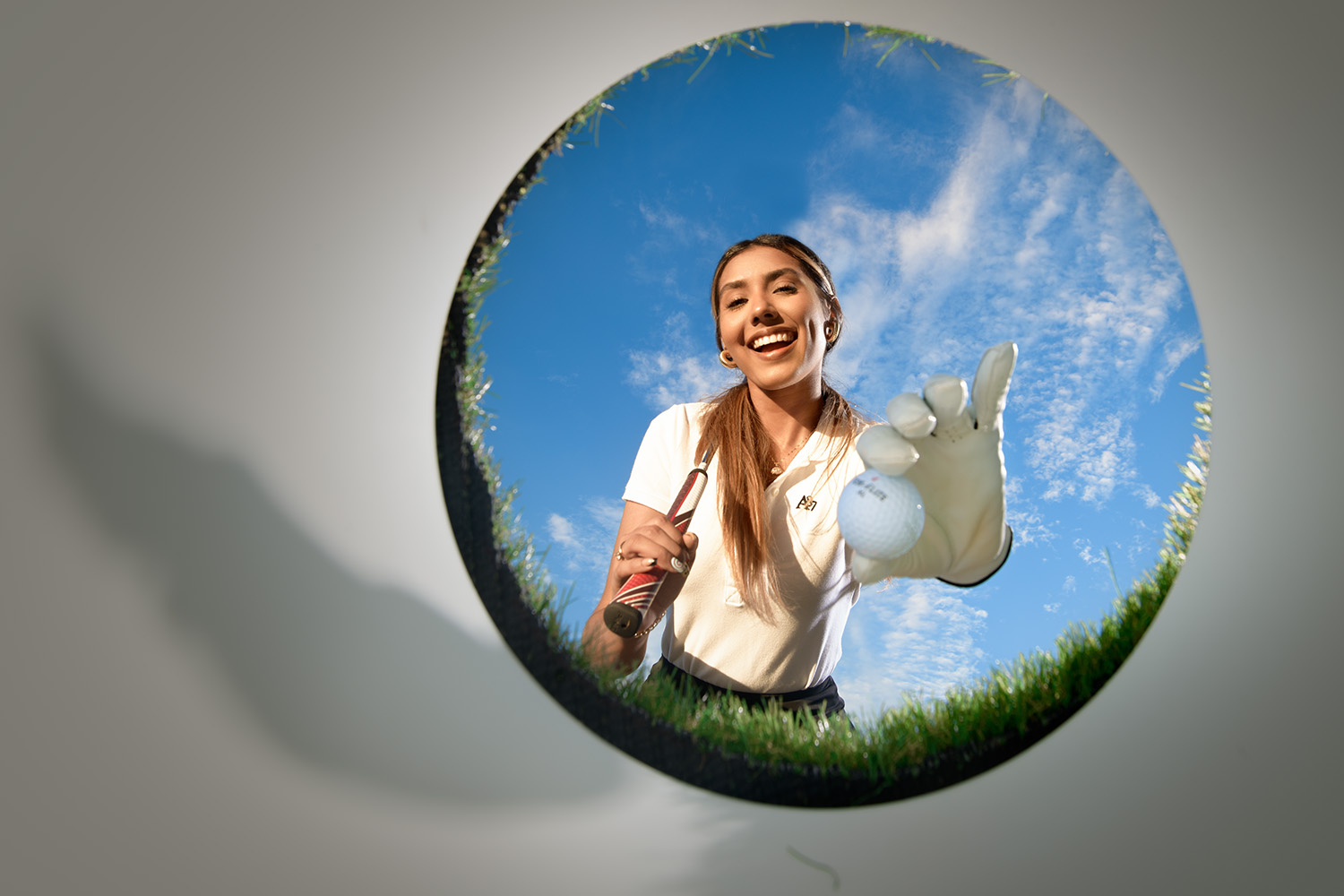
One photograph I've always wanted to create is that classic shot of a golfer fetching their golf ball from the hole. In preparing for this shoot, I tried a lot of different techniques to make this shot come together, but none of them worked as well as I liked. First I tried using a piece of 6" PVC pipe, but the small 6" opening was simply too narrow to achieve the underground effect I wanted. I cut a hole in a bucket that I painted white, but my paint job did not look great and the lip of the bucket was also not perfectly smooth.
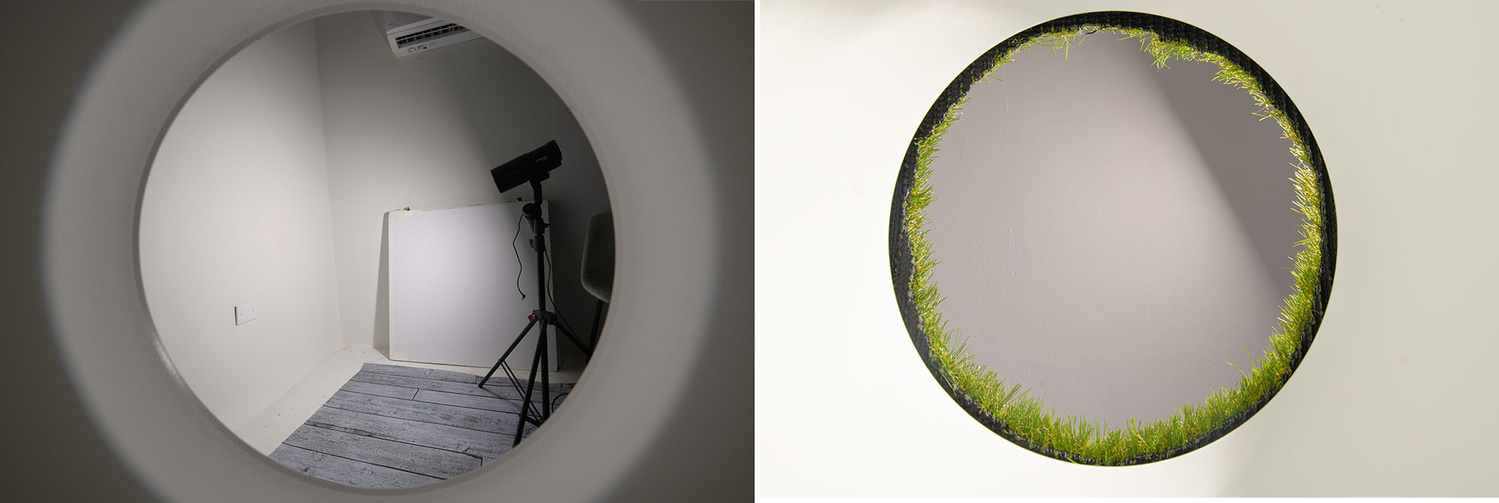
Finally, a crazy idea occurred to me. What if my wide angle lens could fit inside the opening of the Profoto Tele Zoom reflector dish, and instead of using the modifier to light my model, I used it to simulate the hole? Because the Tele Zoom reflector dish is so wide and deep, this gave me the perfect perspective and really sold the effect. The last thing I needed to pull it all together was a perfect 13" hole cut out of some artificial turf so just a little bit of grass would appear to sneak into the shot. Without the Tele Zoom mounted to the Pro-B3, I was forced to illuminate Brittany with just a barebulb flash. In an ideal world, I probably could have lit her with another modifier, but I think this shot turned out better than I ever could have imagined!
Now with my most ambitious image behind me, I wanted one last shot that looked completely different than everything shot so far. For this final image, the goal was to create a more fashion-oriented spread that used all of Brittany's golf clubs and the perfectly manicured grass as the focal point. Once again, the lighting style would change entirely.
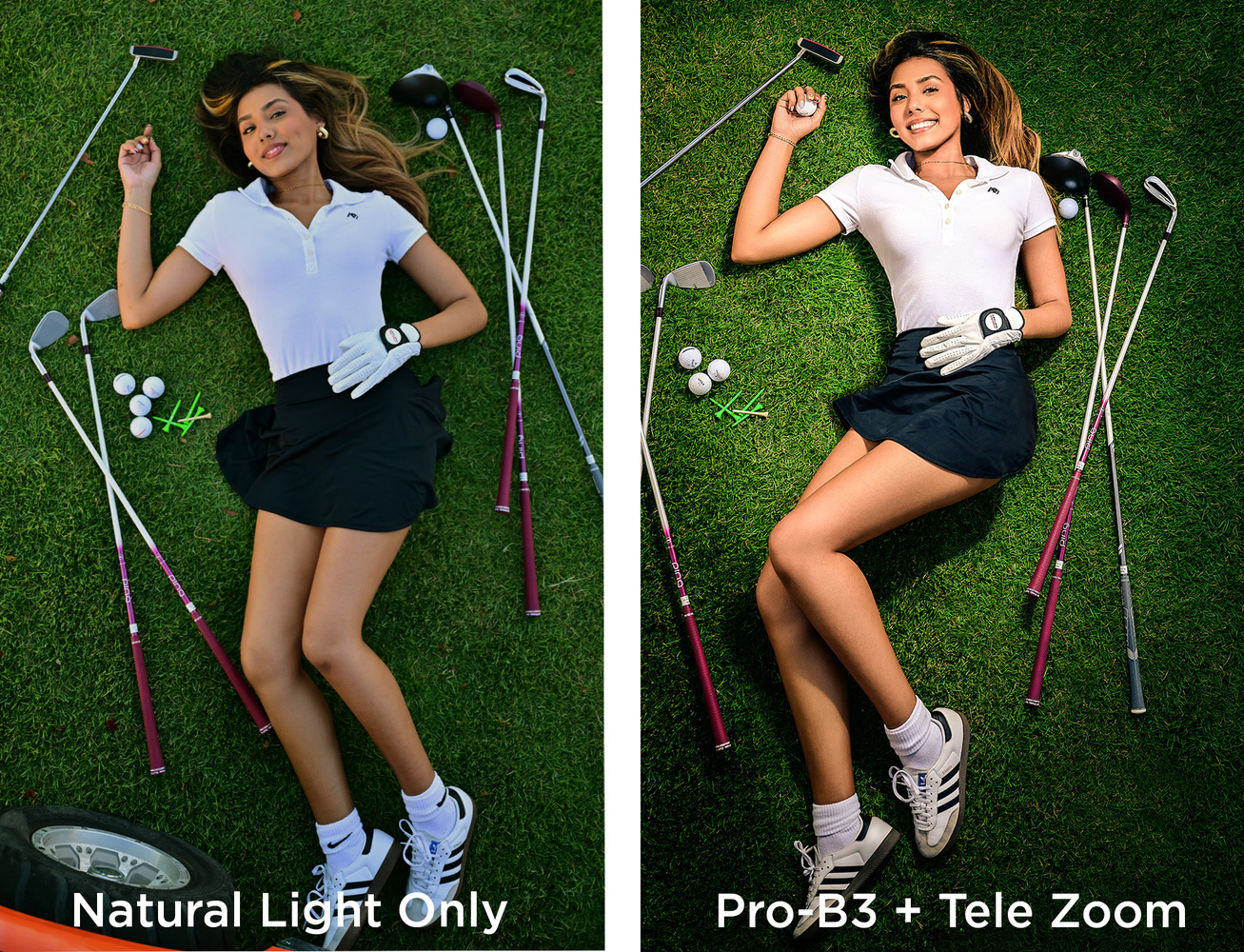
This final shot was achieved by laying Brittany on the ground while I stood on the roof of my golf cart. This top-down perspective allowed the grass to be our background, but from this angle, the sunlight was not illuminating any of the scene anymore. I opted to place the Tele Zoom White reflector directly over Brittany, firing straight down as if the flash were mounted just above my camera. Of course this setup was far too heavy to mount on the camera's hotshoe, so I just had an assistant hold it in the perfect location. You can see the hard shadows cast around Brittany's body as well as the bright highlights in the grass and on the golf clubs. This lighting effect simply would not be possible if the light were positioned in a more traditional spot further off to the right or left.
Always Learn From Your Shoots
So what did I learn from this whole experience? First, the Profoto Tele Zoom White Reflector packs a serious punch! It not only can throw light much further than my other Zoom Reflectors, but it also concentrates the light so much that I can squeeze about a full stop of light extra out of this setup. This is extremely helpful when shooting in bright, natural light environments and also when you need to place your strobes further away from your subject.
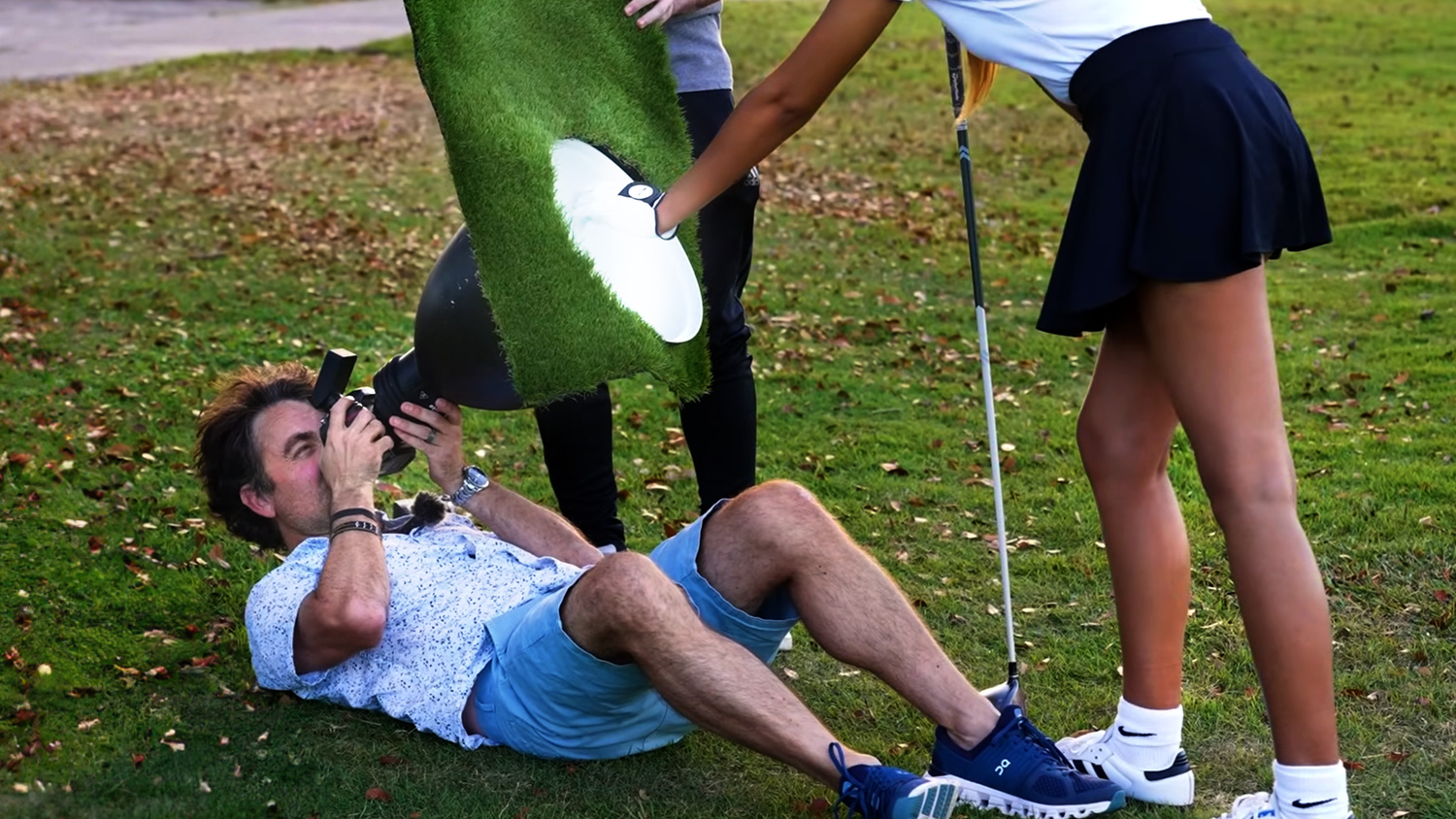
The second thing I learned is that sometimes you have to think outside the box when trying to achieve the photo in your head. It would have been extremely easy to have just given up on the "golf hole" shot or even created it entirely in Photoshop, but instead, I was able to build and shoot this image entirely in camera with minimal editing tweaks. That's always an exciting achievement, and I think these golfing images at the Palmas Del Mar Golf Course turned out better than I could have imagined!




Fun story, I love your creativity
Great article!