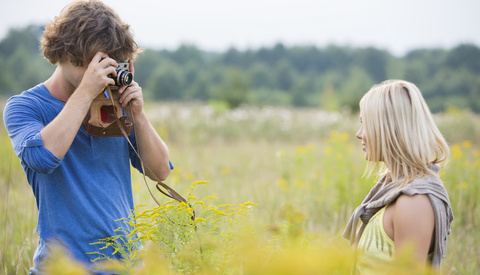
The Simple Psychological Technique That Improves Your Portraits
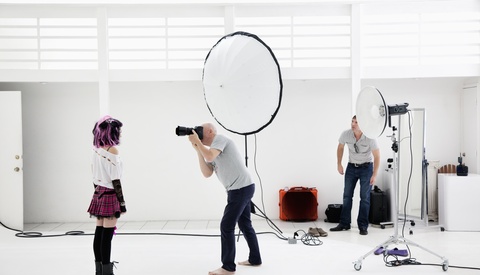
Creating an emotional connection with your subjects leads to stronger images and more business. Psychologists have a technique that helps you quickly establish that connection.
Exclusive articles and expert opinions written by Fstoppers’ talented team of creative professionals. Here we cover everything from the latest photographic techniques to advice on running a successful photography business, to first hand accounts of working in the photography industry.
Creating an emotional connection with your subjects leads to stronger images and more business. Psychologists have a technique that helps you quickly establish that connection.
Photography gear costs have skyrocketed. New Z-mount lenses regularly exceed $2,000, putting professional optics out of reach for many photographers. But there's good news: the used F-mount market overflows with incredible glass that performs brilliantly at accessible prices.
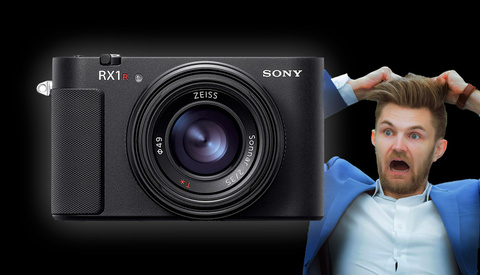
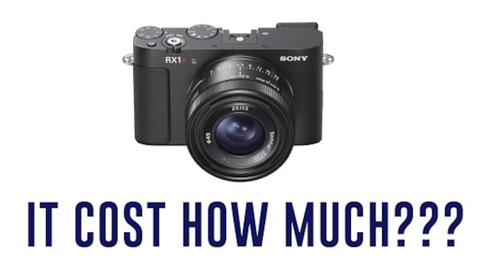
In among all of the brouhaha surrounding the launch of the new Sony RX1R III—the insanely expensive accessories, the recycled parts, and, of course, the $5,100 pricetag—there’s not been much talk about what features fans wanted to see that are markedly absent.
The photographer who believes their education ended with their last workshop or tutorial is already obsolete. They just don't know it yet.
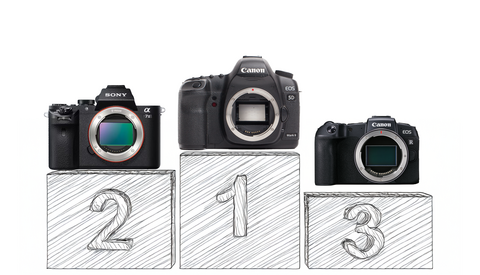
Full frame cameras are known for two things: their incredible performance and their high price tag. I have pretty much always owned a full frame camera, but never paid full price for such a camera. In this article, I will share some options for those of us who want to go full frame but don’t want to pay full price.
Is there a difference between blending and compositing in post-processing? Some photographers make no distinction between the two. But for many, there's a notable difference. It can represent the difference between deception and handling noise or dynamic range.
There are lots of crazy lenses out there that were produced in such limited numbers or are so expensive that they're basically off-limits to most photographers. Here are 10 equally extreme lenses you can actually purchase and use!
Improving at photography isn’t a step-by-step process. It’s a winding, often unpredictable journey shaped by curiosity, creativity, and the kind of images we want to make. So what does growth in photography actually look like?
Today's photographers face a challenging reality: modern lens prices have skyrocketed, with single RF lenses often exceeding $2,500. Yet there exists a treasure trove of professional-grade optics hiding in plain sight: classic lenses that continue producing exceptional imagery at a fraction of contemporary prices.
Six months ago, I predicted that Sony would release a new RX1R, guessing many of the specs, including the price. What I should also have predicted is the backlash that Sony would receive for releasing a camera that is so ludicrously expensive. Here’s why pricing this insane camera at five grand was exactly the right thing to do and why we should be happy about it.
The most valuable photographs you've ever taken weren't the ones you saw immediately on your camera's LCD screen. They were the ones you had to wait for—sometimes a week, sometimes longer—wondering if that perfect moment you thought you captured actually materialized on film. This isn't nostalgia talking; it's psychology, and understanding it reveals something profound about how we value images in an age where we take more photos in a day than our grandparents took in a year.
The whispers have turned into reality: Sony has officially announced the RX1R Mark III, and for enthusiasts of high-end compact cameras, the excitement is palpable.
Wherever you are on your landscape photography journey, there are common myths about how to approach the craft that can hold you back—thoughts that are commonly expressed in online communities that raise doubts and block your progress. Let’s look at three common myths that might be holding you back.
The most devastating critique of modern photography isn't about oversaturation, cliché compositions, or even AI manipulation. It's this: we obsess over the sharpness of eyelashes while missing the tears that give them meaning. We pixel-peep at 400% magnification while life's most profound moments slip past our viewfinders unnoticed.
Looking at this camera announcement, I had to ask myself: Has Sony completely lost their minds?
Here's a truth that many photographers would rather ignore: what separates thriving professionals from those who merely own expensive gear isn't mastery of f-stops and shutter speeds.
I visited my local camera store in Canada recently and chatted with the guy working there about film photography. He confirmed what I was already experiencing from spending too much time on YouTube, telling me how popular it’s become and how the popularity continues to grow. He said it’s mostly younger people getting into film photography, and they can’t keep a used film camera in the display case for more than a few days; they get snapped up. Why is that?
You're probably not using about 100% of your camera's capabilities. Canon has quietly embedded a treasure trove of advanced features that could revolutionize your photography—features so specialized, most photographers never discover them.
Here's a radical thought: the most underutilized piece of equipment in your camera bag isn't that expensive filter you never remember to use or the flash modifier gathering dust on your shelf. It's something else that came with your camera and that you probably tossed aside.
As AI tools improve, we all have to ask: What kind of creativity do we value most? Is it the idea? The process? The perfection or the imperfections? That’s not a bad thing. It’s a sign that art is still evolving.
Kevin Jairaj has been the Official Photographer for the College Football Playoff National Championship since its inception in 2015 and has become sought after for sports, weddings, and events in London; Trinidad and Tobago; the Bahamas; the USA; and, especially, his home state of Texas. Kevin has covered multiple Super Bowls and the Olympics. He shares why double exposures aren't artful, why panning skill is essential, and which standard piece of gear is "obsolete."
The photography industry witnessed one of business history's most dramatic upheavals during the digital revolution. Companies that dominated film photography for generations found themselves unprepared for fundamental changes in how images were captured, processed, and shared. This transformation claimed several iconic brands, each offering distinct lessons about navigating technological disruption.
In an era where 24-240mm superzooms promise to capture "everything you need" in a single lens, suggesting that photographers should intentionally limit themselves to fixed focal lengths sounds almost heretical. Yet the most compelling case for prime lens education lies in understanding how constraint-based learning accelerates skill development and creates better photographic habits.
The Perseid meteor shower is often the most spectacular meteor shower in the Northern Hemisphere due to frequency as well as its appearance in summer. Here's how to photograph it!
The most expensive photograph you'll ever lose is the one you never backed up.
An intervalometer are inexpensive and invaluable. We will break down what it is, how it can help you, and how to use it.
There's a lie we tell ourselves about photography equipment: that the camera doesn't matter. It's a comfortable fiction that lets us sleep at night, convinced that our artistic vision transcends mere machinery. But here's the uncomfortable truth that every photographer who lived through the transition from point-and-shoot to SLR knows deep in their bones: the moment you first wrapped your hands around a "real" camera, everything changed.
The WANDRD PRVKE V4 has exploded on Kickstarter, hitting its funding goal in under 30 minutes and continuing to climb past expectations. With nearly half a million already pledged, it’s clear this isn’t just another camera bag launch. WANDRD’s latest update to their flagship bag has struck a chord with photographers, filmmakers, and everyday creatives alike. But what exactly makes the PRVKE V4 so appealing, and is it really worth the hype?
While the photography world obsesses over the latest mirrorless sensors and pixel-peeping debates, we've forgotten one of photography's most powerful features: its ability to make us laugh until our sides hurt. In an era where every Instagram feed demands perfection and every portfolio must demonstrate technical mastery, these irreverent collections remind us that some of the most memorable images are born from pure, unfiltered joy.
As photographers progress in their journey, admittedly, there’s a natural tendency to gravitate more toward the technical side of things, including myself. The reason is simple: technical improvements are measurable metrics and rather reassuring. You can objectively tell if your images are sharper, your exposures more accurate, and have a higher dynamic range. Whereas growth in reactionary and observational skill sets like instinct is not easily measurable, let alone translated through a camera into our work.
War teaches you how to see. Not in an artistic sense, but in a survival sense. Every detail is information, and every flicker of movement becomes a decision. I didn’t realize it at the time, but that constant scanning and forced situational awareness rewired the way I perceive everything. I went to war with a rifle and a camera; only one still shapes how I see the world today.
Every December, millions of American families would pile into their station wagons and head to Sears, JCPenney, or their local department store for an annual ritual as predictable as Black Friday sales: the family holiday portrait. What most people don't realize is that this seemingly mundane tradition fundamentally shaped modern portrait photography in ways that persist today, creating standards for lighting, posing, and customer experience that professional photographers still follow—often without realizing where these conventions originated.
Opinions should always be challenged, even in the art we call photography. Here are contentious views that you might disagree with. Trigger warning: they might detonate your temper.
Gear content is everywhere—and strangely compelling. Even when we’re not shopping, we keep watching. What is it about reviews that draws us in, even when our photography might need something different?
Remember when photography had rules? Not guidelines or suggestions, but actual rules that separated the pros from the amateurs, the trained from the untrained, the serious from the snapshot-happy masses. These weren't arbitrary dictates from some photography ivory tower—they were hard-won principles developed over more than a century of image-making, refined through decades of darkroom experimentation, and codified in countless photography textbooks that gathering dust on our shelves. Then social media happened.
Sarah clutched the yellow Kodak mailer envelope like it contained state secrets. Inside, a single roll of Kodak Gold 200—thirty-six exposures of her life over the past three weeks, wound tight in its metallic canister.
The photography industry has a short memory. Every few years, we collectively forget the tools that once defined professional image-making, replacing them with newer technologies that promise greater convenience, better performance, or simply different aesthetics. But buried beneath decades of technological progress lie lenses that didn't just capture images—they created entire visual languages, established technical standards, and enabled photographic possibilities that seemed impossible at their time.
You're standing there overlooking a vast landscape after days of waiting—and boom—there it is: the epicness you were looking for. The light kicks off, the shutter snaps, and you’ve captured something unique, magical, and soulfully yours. These are the moments a campervan can give you.
Remember when you could spot a "serious" photographer by the motor drive hanging off their Nikon F3? Or when the difference between ISO 800 and ISO 1600 capability could make or break a camera purchase decision? If you're nodding along, you've witnessed some interesting technological shifts in photographic history that completely obliterated features that once defined camera excellence.
Picture this: You're standing in perfect golden hour light, watching a bride and groom share their first dance as married partners. Your light meter reads perfectly, your Nikon F4 is loaded with fresh Kodak Portra 400, and you've got exactly seven frames left on the roll. Seven. The pressure in your chest isn't just excitement—it's the very real anxiety that defined an entire generation of photographers who learned their craft when every single exposure had tangible, immediate value.
There's a moment in every storm chaser's career when they realize they're no longer just documenting weather—they're bearing witness to something far more profound. For Hank Schyma, better known as Pecos Hank, that realization came gradually over three decades of pursuing supercells across the Great Plains, but it crystallized into something deeper: an understanding that storms aren't just meteorological phenomena to capture, but windows into the very nature of scientific truth and human humility.
The world of photography has undergone significant transformations over the past few years. More changes are happening now, and it’s fascinating to see it evolve and affect our photography. Companies need to adapt or face extinction.

Many shooters spent the last decade collecting faster lenses and bigger sensors, but a counter-movement now ripples through wedding albums, street-photo galleries, and TikTok feeds: pictures that leave the mistakes in. Motion blur, light leaks, camera shake—even a deliberate miss on focus—are suddenly welcome, propelled by a cultural hunger for images that feel honest instead of air-brushed.
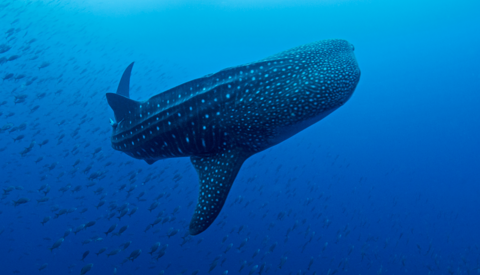
Why do we take photographs? Is aesthetic beauty the only value to photography? Can we use our tools and talents to create something with a deeper purpose? Although there are those who may disagree, objectively, our planet is in trouble. Let's consider, then, whether photography can save the world. I'm going to start with our oceans, where I'll specifically consider Galapagos Whale Shark Project and its goals to understand and protect whale sharks. I want to think that photography can help to save the world.
When Kodak filed for bankruptcy in 2012, it wasn't just the end of an iconic brand—it was the tombstone marking the grave of a centuries-old apprenticeship system that had been the backbone of professional photography education. Today's Instagram-famous photographers may command six-figure day rates, but they've never experienced the foundational learning that came from spending years in the trenches as a photography assistant, and the industry is weaker for it.
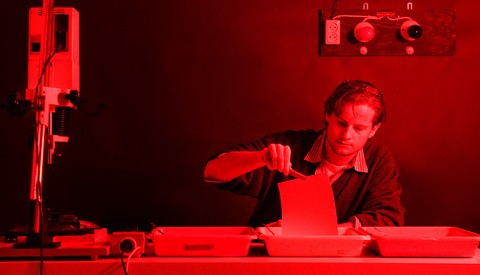
When Lisa first picked up her camera to photograph newborn Emma, she thought she was simply documenting precious moments—but over eighteen years, that faithful lens became witness to something far more profound: the complete transformation of a helpless infant into a confident young artist ready to claim her independence.
Do you need Iceland or an exotic location to take great photographs?
The Fstoppers community is brimming with creative vision and talent. Every day, we comb through your work, looking for images to feature as the Photo of the Day or simply to admire your creativity and technical prowess. In 2025, we're featuring a new photographer every month, whose portfolio represents both stellar photographic achievement and a high level of involvement within the Fstoppers community.
Sarah met David on a Tuesday evening in October, at a coffee shop where she was grading papers and he was editing photos on his laptop. She noticed him first because of how intensely focused he seemed, swiping through hundreds of images on his phone, occasionally transferring them to Lightroom and making quick adjustments. When she asked what he was working on, his eyes lit up with genuine enthusiasm.
Landscape photography is often misled by a pervasive myth: that "perfect conditions" are a must for capturing great images. This belief has caused many photographers to wait for ideal weather or chase forecasts for the best light, missing out on incredible opportunities in the process. However, experienced photographers know that the best images can be captured under any conditions, and waiting for perfection can hold back both creativity and growth.