
Some say film photography is better than digital. Film has a more organic, natural look. Shooting with an analogue camera is a better experience and a purer form of photography. Others say digital photography is better because computer technology makes photography easier. You can shoot more frames and focus quicker, and experiment more by shooting more without the need for a second mortgage. Buckle up, this might get ranty.
In recent articles, I mentioned I’ve gone back to film photography again. I said I believe it’s easier to understand and learn the principles of photography on an old film camera because there are no buttons, dials, or menu functions to distract and confuse you. This caused a huge debate in the comments and made some people angry. If it were the Middle Ages, I’m sure I would have ended up being burnt at the stake for sharing these opinions that are nothing short of heresy. And this is the key word—opinions. I share my opinions here, not facts, just opinions. We all have them, and clearly, we all want them known. Sadly, though, some people mistake their opinions for facts and insist they are right. That’s when the problems really kick off.
So if you’ve decided to continue reading this article, dear reader, be warned it is laced with more opinions—and some facts too. Luckily, I’ve figured out the difference and will hopefully make this clear.
Some Background
Our opinions are often formed from our experiences—at least, they certainly should be. When it comes to film photography vs. digital photography, I have 40 years of experience, starting with learning photography on a basic film camera at college.
I spent the first 20 years shooting on film—35 mm and medium format cameras, from faster black-and-white negative to slower transparency. I must have shot hundreds of thousands of film photos during that time. I started out learning on a used Nikon I picked up at the local camera store, made in the 1970s. I loved that camera, and still have it. Recently, I dusted it off and took it out to play. I made a vlog about it, which you can watch here.
By the late ’90s, I had purchased a Nikon F5—their flagship camera at the time, and one of the best modern film cameras ever made, in my opinion. I also had a Bronica ETRS for bigger client projects where photos being reproduced on large posters and store displays were required. Both of these cameras allowed me to get the photos I needed and earn a living. I also shot for fun, as photography has always been both work and play. But then it all changed—along came digital technology.
The first few years of digital cameras were of no interest to me. I had a Nikon D200, which was terrible in low light, and then a D300, which was a little better. It wasn’t until 2008 that I was really happy with the results of a digital camera for all the types of photography I was doing. That camera was the Nikon D700. I still have it and use it. It’s fabulous.
So I shot on film for 20 years and now digital for 20 years. I had no bias; a camera was always just a tool that allowed me to transfer an idea to paper, or more recently, a computer screen. Whether shooting in studios or on locations around the world, I simply chose the right tool for the job and gave it no further thought. Photography was simple; life was good.
I Started To Hate Digital Technology
Maybe hate is a strong word—maybe it’s the wrong word. Digital technology has made life so much easier for photographers. I’ve undoubtedly benefited from that. I think I have more of a love/hate relationship—a Richard Burton/Liz Taylor kind of deal.
The ability to see how a photo might turn out before you press the shutter is incredible. The ability to see a histogram to make sure you don’t clip highlights is very useful. The ability to focus track fast-moving subjects for sport and wildlife photography is a game-changer.
But it all gets a little ridiculous. Small tweaks and changes keep getting added, and yet another new camera model is created. Sometimes a newer model is not as good as previous models, and there is often no real reason to upgrade. But we’re persuaded into thinking there is. Camera models are turned around so quickly it seems the quality of manufacturing has declined too. Cameras and lenses have become plasticky and cheap-feeling, and they break easily.
Recently, I decided it was time to replace my trusty Nikon Z6. I’ve had it for eight years, and bits have been falling off from so much use and abuse. It’s my workhorse, and I love it. It does everything I need it to do for all the genres of photography I do both for work and pleasure. Having a strap lug break off means I can’t have it around my neck when I travel, and I need a camera with a neck strap.
The sensible me figured if I love the Z6 so much, then buy another Z6. They can be picked up for around $750 now, which is great value. But then the smart me thought, I do more video for clients now than I do photography. So if I get the Z6 III with its incredible new video capabilities, I would not only have a great photography camera but the perfect backup camera to my Z9 for video projects. Smart thinking, huh? It turns out it wasn't. I got the Z6 III, and four months later, I wished I had gotten a replacement Z6.
Sure, it’s a great B cam for video, but all the new tech, from a photography point of view, is not needed—for my requirements, anyway. It’s also made the camera bigger. The fold-out flippy screen is terrible for photography compared to the Z6 screen. Little Brittney might like it for recording her makeup reel for TikTok, but little Simon finds it bloody annoying and impractical, particularly when using a camera strap. And then there’s the partially stacked sensor. It’s the same 24 MP sensor as the Z6, but those engineering techy types at Nikon bolted on a faster processor, making autofocus and processing snappier. I don’t need that, and I’m sure, with their attention aimed toward speed—because that gives the marketing boys and gals something to work with—the Z6 III’s image quality is compromised. The Z6 III’s image quality and dynamic range are no better than the Z6’s, from what I can tell.
The point is, image quality reached its pinnacle years ago, so now we’re being convinced we need faster focusing or improved video—or more silly program modes like black and white and built-in color presets called “recipes” (recipes, my arse) in case we can’t figure out how to move a few sliders in Lightroom.
Today, I’m back with the beaten-up Z6 a lot of the time, but have less money in my bank account. Yup, a little ranty there, folks.
Photography YouTube Influencers
Worse than the ever-improving technology in a digital camera are those little buggers who keep hyping it up and trying to convince us to part with our hard-earned cash and buy one, just so they can make a commission or fee from doing so. These guys call themselves professional photographers. Most of them are just professional snake oil salesmen. Maybe I need a separate article about this to say how I really feel?
We need more conversations about creativity and why we take/make photos, not about buying new gear. We need to understand a new camera is not going to make us a better photographer—practicing and experimenting is. Time is our answer, not money. We need to see more and spend less.
The Computers Are Taking Over
As much as digital cameras allow us to experiment more and potentially create incredible images, I find that because cameras are loaded with so many features, many people new to photography are overwhelmed. Too much choice can be confusing and actually block creativity. So many new photographers don’t take time to really understand photography and how a camera's basic functions like aperture, shutter speed, and exposure control actually work—because they don’t need to. I’ve known people to buy a new camera, get frustrated at how much there is to figure out, and simply say, “Sod it, I’ll leave it in fully auto mode.” Your photography is then created by luck, not skill. That’s like trying to make a living by buying a lottery ticket every day instead of learning a skill and getting a job.
Understanding shutter speeds, apertures, and exposures was once the cost of entry into the world of photography. It got you through the door. Now there is no door—just walk on in with a camera you picked up on Amazon, with a fully charged battery. You can now blindly rely on the technology to do all the work for you. Is this a bad thing? If you want to become more than a mediocre casual photographer and make wonderful creative photographs, I think it is. But this is just my opinion.
My Relationship Today With Digital Cameras
Digital cameras have become hybrid cameras—a tool that allows you to create photos and video. These cameras undoubtedly have their uses. As someone who shoots both photos and videos for work, they are amazing. But what about those who just want to pursue a love of photography and aren’t interested in videography? Only Hasselblad and Leica make pure photography cameras. Unfortunately, these are professional tools and/or luxury items, the price of which cannot be justified for the majority of us. A few other brands are trying to create that retro photography experience, but no one has got it quite right just yet—possibly Fujifilm with their X100 series is close.
If I take my client work hat off—which I’m doing more and more these days—as a passionate photographer who has lots to say artistically and plenty of personal projects to work on, a new digital hybrid camera isn’t ticking any boxes for me or getting me excited about wanting to own one. I’m using a six-year-old cropped-sensor Nikon Z50 for hiking trips, an eight-year-old Z6 for travel and street photography, and more recently, I’ve turned to my 17-year-old Nikon D700 for many urban and landscape projects. Black-and-white photography is my biggest passion, and I bought a Leica Q2 Monochrom two years ago for that. Its simplicity allows me to use it like an old film camera. The drawback for many would be its fixed lens.
I often get asked what the best all-round digital camera is to buy, and I’ve given this a lot of thought. What would I buy? What if I didn’t need a Nikon Z9 and Z6 III for video work? Well, my old Nikon D700 is almost perfect, but it’s only 12 MP. That’s fine for most things, but I’ve found 24 MP is the sweet spot for all my needs. This means the best all-round camera I would choose is a Nikon D800 from 2012, with 36 MP. The D850 from 2017 has some improvements in quality apparently, but that’s getting into rather boring pixel-peeping territory for me. The D800 does everything I need it to. If only it were smaller and lighter. It’s hard to find the perfect camera, but this one is close. What I love about this camera is it’s an F mount, so I get to use all my lovely old Nikon lenses on it—proper lenses, not the delicate focus-by-wire plastic crap Nikon makes today. Actually, there is another more modern camera I recommend: the Nikon Z5. An absolutely fabulous 24 MP mirrorless camera. It’s an underrated bargain. The challenge is finding good lenses for it, though. The Z-mount f/4 24-70mm is a good option, but my preference is to use older manual-focus primes that are built like tanks and have some character to them. It's good to see brands like Voigtländer make Z-mount options now. If I didn't have vintage Nikon glass, I'd be looking at their superb range of tough metal helicoidal lenses.
Leica Doesn’t Let the Market Dictate What They Do
I can understand why Leica cameras are becoming increasingly popular. A Leica M digital camera is the nearest thing to a traditional film camera experience—actually, it’s the nearest thing to the perfect camera.
With a Leica M, you are once again forced to learn the principles of photography, and you have to actually do some work and contribute something to the process to get your photo. You don’t have a load of silly distracting buttons and dials, just things you actually need: a shutter speed dial, an aperture ring, and a distance scale on the lens. You have to manually focus. Yes, there’s a little tech inside if you need it, but most photographers choosing these cameras don’t need it. Leica says this on their website: “Rangefinder cameras that deliberately don’t offer everything that’s technically possible, but rather remain limited to what’s photographically useful.” That nails my thoughts perfectly. They also state, “Photographers are empowered to capture the very essence of a moment, unburdened by technological distractions.” I often wonder if technology being added to cameras is nothing more than a pissing contest between engineering and marketing departments at the different camera companies. It’s all about them, not the photographer. My wise old granny said to me once, “Just because you can do something, doesn’t mean you should.” She could have worked at Leica.
Yes, a Leica camera and one or two wonderful Summicron or Summilux lenses are cost-prohibitive to many of us—unless we still have a healthy liver or kidneys to sell. But in the long term, once you buy a Leica you won’t need another camera for many years—maybe never again. And think of the savings from not buying film and having it processed!
I have to wonder—why on earth isn't Nikon or Canon playing on their heritage and making digital versions of their wonderful 1960s rangefinders? Imagine if they took the Leica approach and made a simple, high-quality rangefinder, free of plastic, that provided a simple photography experience? I'd wager they wouldn't be able to keep up with demand.
Back To Film Photography Then?
With all I’ve said about digital technology, and how it gets in the way of photography, is it any wonder I dusted off my old simple Nikon EL2 and have started running film through it once again? I made a video about my first outing with the camera and stated how much I like the feel of holding something simple and solid. I said how much I like the tactile experience of using something mechanical, of understanding it and being in control of it, and how much the shutter noise and film advance winder sound makes me happy. Someone said in the comments, “It's 2025. Give up on the film crap. It does not look better. Shooting film because the shutter sounds cool? Who cares what the shutter sounds like.”
Well, DA Photography from Canada, I appreciate the comment, and thanks for the great T-shirt idea. Does anyone want to buy a T-shirt that says, “It's 2025. Give up on the film crap. It does not look better”? I might just get that made!
I do agree with DA, though, that film photos don’t look any better than a digital photo. You can achieve a film look digitally if you know what you’re doing. Using a vintage lens with character on a digital camera, over a perfect and sterile modern digital lens, can make a difference too. Film photography for me is about the experience, the nostalgia, and the way the physical process makes me feel. I’m a huge believer that gear really doesn’t matter—until we find something that we want to pick up and use, and enjoy holding. Then it matters very much.
Possibly the biggest appeal, particularly with older film cameras, is the craftsmanship that went into making the camera. Same with lenses also. I enjoy holding something that’s been skillfully made by hand, by an expert craftsman, using the finest quality components. An old camera is like owning a vintage Rolex—you can’t help but appreciate its heritage, quality, and beautiful design both inside and out.
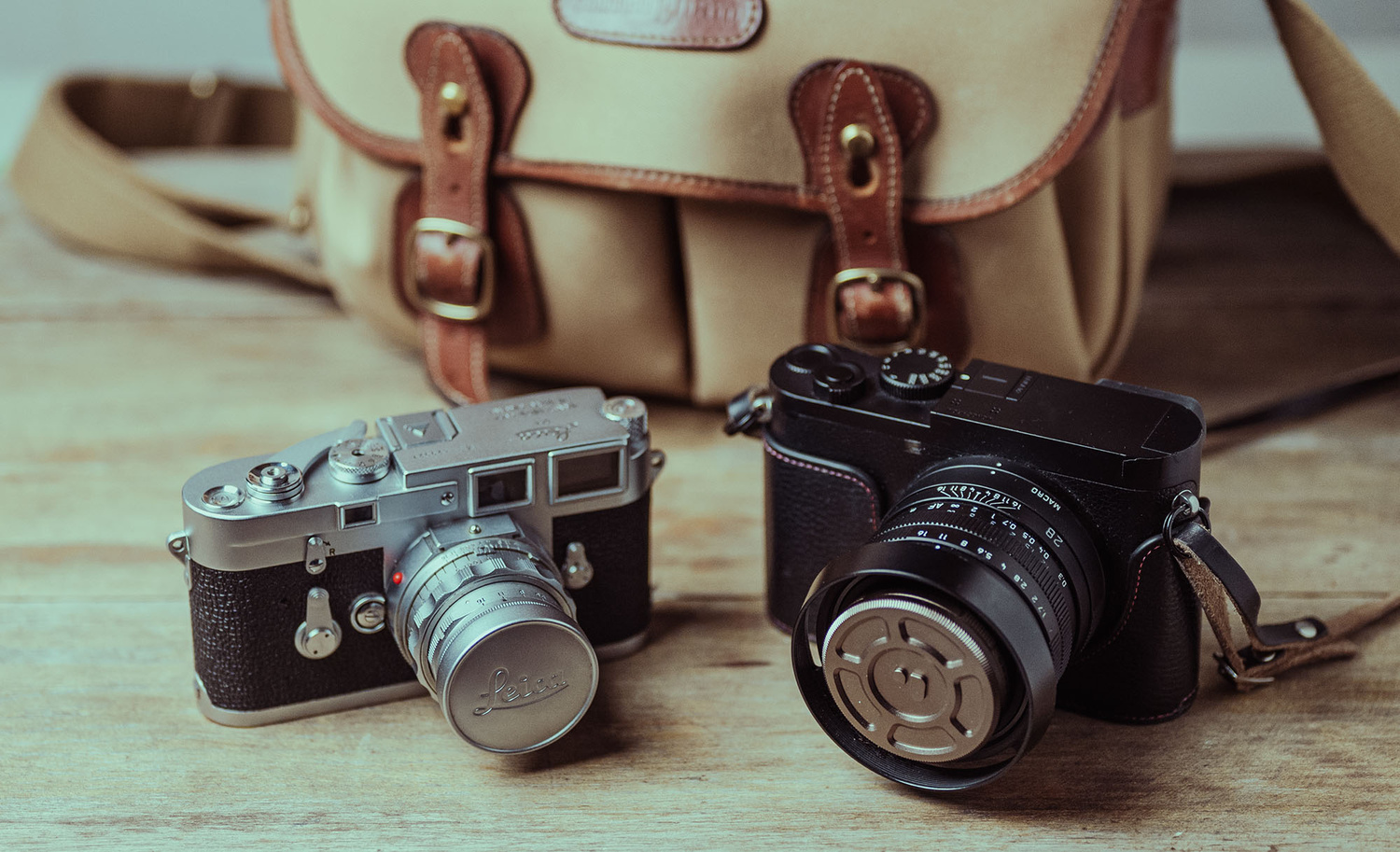
To that end, I just purchased a 70-year-old Leica M3—a mechanical masterpiece. It’s made with brass, even the cogs are brass, and the 1956 lens I bought for it is solid brass and glass. Come on! The experience of using that is next level. I’ll do a separate article on it, if you’re interested.
My Solution To My Film vs. Digital Dilemma
Let’s be clear—this is my solution, not the solution. I enjoy the experience of using a film camera. More specifically, an older film camera with nothing but a shutter speed dial and a manual-focus lens with an aperture ring and distance scale. But this is not always practical, and film is expensive.
A digital camera does make life easier for many scenarios. When it comes to street and travel photography, with my Q2M or Z6 I can easily shoot 400–600 frames in a day. I would go bankrupt if that was shot on film.
My solution, at the time of writing this article, is to go out with two small cameras. For black-and-white photography, I take my Leica Q2M with its 28mm Summilux. And I also have my Leica M3 with a tiny Summicron 50mm lens, loaded with HP5+ film.
I have the best of both worlds. I can shoot digital and get shots quickly and easily, without worrying about cost. And when I see an opportunity to slow down and really enjoy the experience, I can pull out my M3 and shoot some film.
For color photography—which admittedly I’m doing less of these days—I take one of my Nikons, preferably with some vintage glass. I’ll typically choose just one lens: a 20mm, 28mm, or 35mm. And the other camera in my bag is the Leica M3, or maybe my Nikon EL2, with a roll of Kodak Portra 400.
I am finding I shoot maybe just 4–5 photos on film on most outings, so a roll will last for a month or so. No great expense there. If I don’t take the M3, I’ll grab the 50mm Summicron and pop it onto a Nikon with an adapter. This works really well.
There are only two things a digital camera gives me over a film camera—other than saving on film costs. The first is the ability to program a zoom-in/out function on one of the camera’s buttons, because I use manual glass. My old tired eyes need some help to focus, so zooming in to fine-tune the focus is a huge help. It’s interesting to note that the viewfinder on the M3 is huge—better than any other Leica rangefinder—and the focus patch is easy to see and use. So is the split focus screen on my old Nikon. I don’t need additional help on either of these cameras to set perfect focus. But I need help on a modern digital camera, despite being able to adjust the diopter. Old analog OVFs are better than modern digital EVFs—interesting.
The second thing I love with a digital camera is the ability to have a histogram in the EVF or on the screen. I prefer to shoot manually, so seeing the exposure so easily means I can adjust the shutter or aperture dial instantly. I really love that.
Summary
There is no one solution, or right solution. If you like film and manual cameras, go that route. If you like the convenience and speed of digital technology, go that route. There is no better solution—just the right solution for you. So long as you enjoy what you do, and it makes you happy.
So it turns out, after lots of playing this past year, I’m very happy enjoying the best of both worlds.
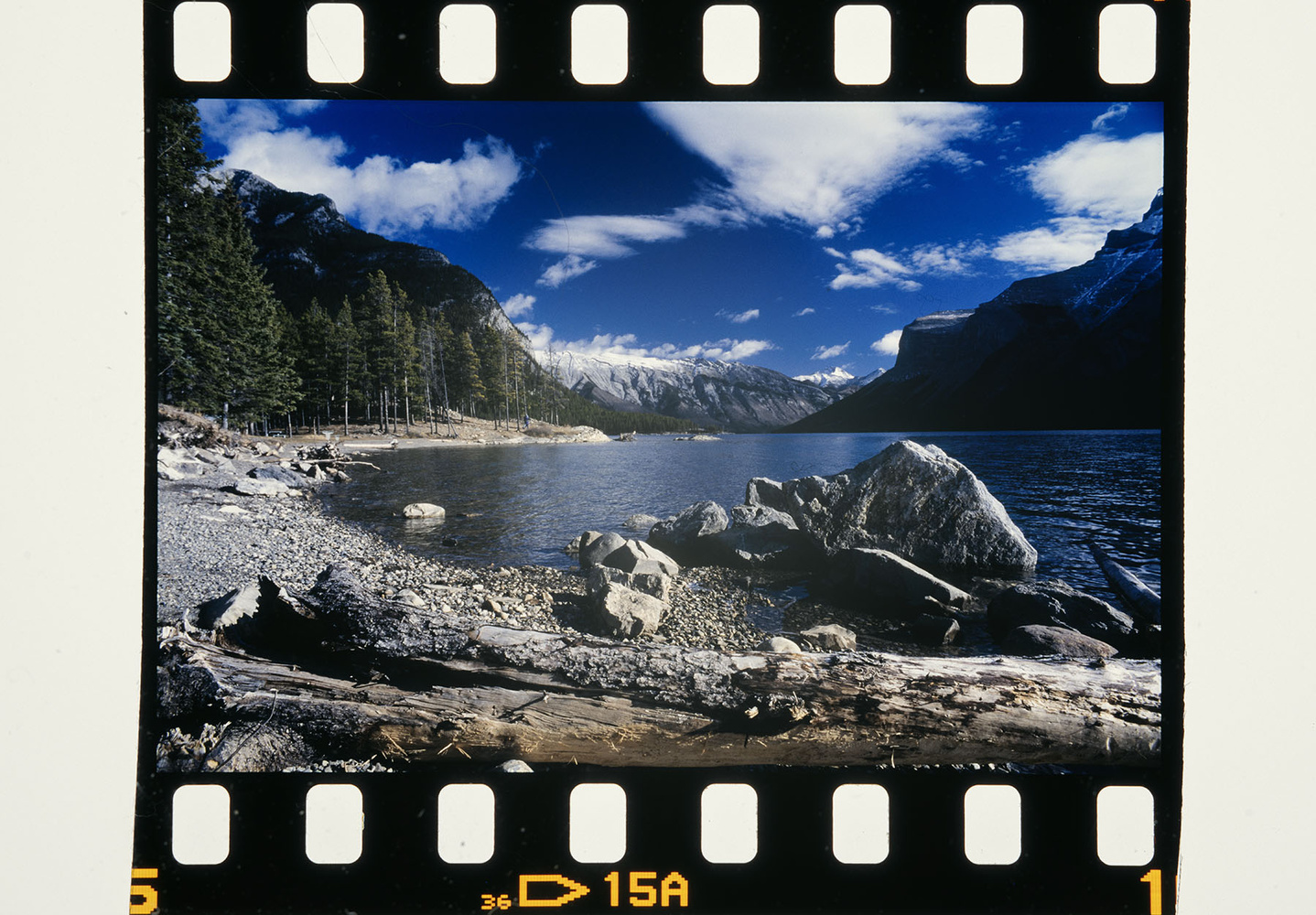
Oh, FYI—the main image alludes to showing a digital photo next to a film photo. They are both film. One was processed digitally, ironically, to look more “film-like.” It's all about the end image, not how it was created.





For many of us there is no debate. Can't imagine being stuck with a single ISO speed and fixed white balance for 36 exposures. And no, my darkroom is permanently closed. Film? For me, never.
My words exactly for the past 20 years! Then I picked up a few vintage film cameras for the first time in decades.
I enjoy talking about this subject, but debate is silly. The decision of film versus digital is 100% a subjective decision. There are many fine art photographers that will never go digital. They enjoy shooting TriX on an 8 x 10. Many digital shooters would never shoot film and I understand why. And that’s the best for them. it’s an interesting subject to talk about, but it’s not a debate.
Ansel Adams was a master of manipulating, the negative, and I’m pretty confident that he would love using Photoshop. A digital photograph displayed on a computer screen or a phone may be beautiful, but it’s ridiculous to compare it to a 30 x 40 professionally print on the highest quality paper.
I used to think that about Ansel too (that he would embrace Photoshop), but anymore I'm not so sure. I say that as an enthusiastic photo editor myself. You would think that I would be open to using all of the latest tools available such as Generative Fill and many AI apps that supposedly make post-processing so much easier. But there's something as a Photoshop old-timer that feels kind of creepy about the new tools, even though arguably we're getting to the same end result with a picture and faster. So I'm wondering if Adams, steeped in darkroom chemistry, would have embraced the new tools, even though he probably never hesitated to manipulate his own negatives. I'm no longer so sure he would. I don't think he ever took a liking to color photography.
He did lovely color work for the National Park Service. His burning and dodging work was legendary. He likened the negative to the score of a symphony and the print was the live performance. Wether or not he would have embraced Photoshop we will never know, but he was always pushing the envelope of the latest darkroom techniques. One has vastly more control over contrast and selective brightening and lightening in Photoshop than Ansel could have ever dreamed of. The automobile is significantly faster and more efficient than a horse, but that doesn’t diminish the pleasure of riding a horse.
I enjoy talking about it too, maybe debate was the wrong choice of word.
I'm sort of a 'Hoarder', so when I buy, I buy for keeps. The only purchased cameras I ever sold were due to hard times. I still have my Nikon FE2 from the 1980's which was my first semi-pro camera ! That and a bunch of other film cameras. Sometimes I just like to look at them. I might be a hoarder, but I'm no Luddite, I also have my assortment of Digital cameras and try to keep up with the latest software if that is possible... Sometimes I just like to relax and shoot film. My darkroom is still open BTW and is actually evolving. However, when it's a must that I got to have the shot, or for professional use, I quickly switch to digital. I find phone pictures rather boring, but if I see a flying saucer and my phone is all I have, then so be it.
I love the FE2, but never owned that model. I recently bought a mint FE, which I have yet to use. Looking forward to it. I agree, for pro use, digital makes zero sense. I may be a fellow hoarder!
Gosh, is the Z6 already 8 years old? I’m at that period of my life where my brain is having a hard time accepting how much time has passed between the present and things that just happened “recently” hah!
Your article was an interesting read. I’m just happy that there are more choices for engaging in the art of photography today than ever before. I’m fearful that the resurgence of film may be at its tail end due to the increasingly strained set of economic circumstances facing many (including Eastman Kodak apparently), but at least for now it’s still within reach.
On the digital side, the technological advances have allowed us to do certain types of photography better than ever before, sometimes things that would have been implausible 10 years ago.
While I appreciate that side of things immensely, in between chasing hummingbirds with my digital wildlife kit I also spent some free time on the weekend taking B&W photos of dilapidated barns out by my farm with a Contax G1. It’s just fun, and healing for the heart in my experience.
I just find photography so enjoyable, and I hope as many people as possible can share in some part of that joy. Whether they’re old codgers engaging in a ritualistic practice of the exposure triangle, or 19 years old with a phone or some digital camera in P/Auto instead of M.
Creativity, artistry, and one’s eye develop by doing photography. People develop into photographers because they’re driven to create certain photos, and if that drive is strong enough they’ll find out how to get there, whether or not it’s with the most tricked out digital flagship, some plastic Lomography camera, a hand me down DSLR, or an Instax camera.
Looking forward to reading more articles! I love thinking about and considering what photography can bring into people’s lives.
This is a fabulous comment, thank you!
The thumbnail image caught my attention and I’m glad I clicked. As an Albertan, It’s not often that I see my backyard on fstoppers, hah!
You have an interesting take on photography, Simon. I haven't thought once about a different camera since I bought my last one twelve years ago. You seem to wrestle with it constantly. Granted, purchasing equipment as a business expense adds a few complicated questions. But then again, we were all operating a business effectively with the gear we had a decade ago. For personal reasons of photography, I wonder if we're complicating the subject unnecessarily? How much does a few ounces really matter? Or a few unnecessary camera features? My D800 supposedly has video capabilities, but I've never once used it. Doesn't mean I have to go hunting for a camera that aligns perfectly with my needs.
I too have a love-hate relationship with photography, but it has absolutely nothing to do with my camera. My entire reason for clicking the shutter is to make a beautiful print that I can just as easily become engrossed in, as much as a good book. I love it when it all comes together and a print succeeds. Maybe hate is too strong of a word, but disappointment is the other extreme, in which case the print just doesn't excite me. In either case, the camera has nothing to do with it. My point is consider taking focus off the camera and focus on the print, which will really bring you back to an earlier time... something you seem to be searching for.
Thanks for the great thoughts Ed. You are quite correct, I do wrestle with equipment. This is because I am doing less client work these days, and more personal work. For client projects, the latest digital cameras are essential to the get a job done quickly and efficiently. A film camera makes zero sense. But as I pursue personal projects now, a digital camera has less and less appeal. I am in no rush and the experience is as important as the final result. This is an ongoing battle I will continue to document and share, and appreciate you reading and engaging as I do so.
Wouldn't it be great if business and personal styles and needs merged into one nice neat little package? I haven't quite perfected that model, but I'm working on it because it's the only option that I'm willing to consider at this point in my life. I would rather live out of a shoebox than put up with a job that sucks the life out of me.
Haha, I feel the same way. I'm attempting to reduce my client work, and put my efforts into personal projects, moving forward. hence all the thoughts about film etc. Photography is so much more enjoyable when you're doing it for yourself.
i've ordered the shoebox.
I understand David but there is a major silver lining in fixed ISO and 36 images. It slows you down and allows you to focus on quality over quantity. My goal when I go to Yosemite or Joshua Tree is to take 3 excellent images I will print of share electronically, not 600 photos that take hours to cull down to your favorites. One of my favorite cameras was the Nikon FM2 with a 60 mm f 2.8 micro/macro lens. Wow what a power house combination. Gorgeous macro, extremely sharp and beautiful bokeh. An added benefit was that the FM2 worked without a battery. The best way to learn photography is to shoot manual and learn the relationship between shutter speed, aperture and ISO. I took a trip to France and decided to take one prime lens, the Nikon 60mm f2.8 micro. Best decision I ever made. I think it is possible to learn the basic triangle of Shutter speed, aperture and ISO in a focused weekend of shooting with a digital camera. The 60mm f2.8 micro amazingly works on the Nikon FM2 and my D600. In France I zoomed by walking closer and walk back to zoom out. Try it some time, It works. It’s far cheaper than a zoom and a prime is lighter and sharper. Go figure. Just saying.
I once shot weddings using a Hassy 500 C/M with three lenses; the 50?80/150 trio. Shot 12 exposure rolls. Trust me, I don't need slowing down. ;-)
I was suggesting that digital shooters should slow down not film shooters
Wonderful article Simon. I will stay digital, but would like to add some more Zeiss lenses to my Canon collection. The quality feel of those all metal lenses (except for the glass bits off course) just love handling them.
Ah, those older Zeiss manual focus lenses are incredible! I picked up a 135mm f/2 made around 2012, and the quality of the images—at this point—hasn't been rivalled by anything newer.
Your thoughts and opinions resonate with me. After just two years of learning on a Canon R3, I moved to Leica — not for nostalgia or status, but because it forces me to slow down, keeps the workflow smooth, and makes the process simple. For me, that’s the real value beyond the film vs. digital debate.
I agree Alvin, the process is the important thing, not the medium used. I think more specifically, the experience of the process. Slowing down is rarely an option for commercial work, but when pursuing photography as our passion—our hobby—then I think it's a very important consideration. Thanks for the comment.
I agree Alvin, the process is the important thing, not the medium used. I think more specifically, the experience of the process. Slowing down is rarely an option for commercial work, but when pursuing photography as our passion—our hobby—then I think it's a very important consideration. Thanks for the comment.
Hobbies aren’t even worth discussing — they follow entirely different rules and motivations.
I realized that I don’t know how to shoot quickly or work in a rush. That’s why I had to slow down and avoid genres where reaction speed is critical. But here, everyone has a different path.
Alvin Greis wrote:
"I realized that I don’t know how to shoot quickly or work in a rush. That’s why I had to slow down and avoid genres where reaction speed is critical."
This is interesting to me. When you made that realization, you had two options open to you:
1: learn to react and shoot quickly and work rapidly; practice reacting and get much faster
2: not learn new skills and choose instead to avoid the genres that would require you to do so
It is interesting that you chose option 2 instead of option 1.
There are many other factors. Trends in photography, the future transformation of demand, profitability and competition, previous experience and education.
Why rush where everyone else is, if there are plenty of other opportunities?
And I don’t think speed is a useful skill — that’s what AI is for. Tomorrow it will do the job better than even the fastest photographers.
Debate?
There is no debate going on in the real world.
Whatever debate there may have been was settled 20 years ago ..... at least in the genres of wildlife and sports action photography, as well as for 99% of the photographers in all other genres.
We had this discussion in Simon's last article dealing with this same subject of film vs digital, and it drew 104 comments. Now I can't say if Fstoppers readers are a fair crossection of the real world, or if debate is an accurate description of what's going on here, but you have to admit that there's a lot of interest in the subject. And as long as people keep posting comments, we'll probably see another article along the same lines.
I think it's an interesting topic because it gets at the heart of what photography means to each of us. So it's basically an article and discussion about camera gear, but without feeling like it's a sponsored video promoting the latest camera, lens, or gadget.
Ed wrote:
"Now I can't say if Fstoppers readers are a fair crossection of the real world ....."
Ha ha! Those very few of us who participate in online discussions about photography are a super tiny fraction of photographers overall, and we tend to have a VERY different mindset than the 99% of serious photographers who never bother to engage in, or even look at, such discussions.
We should never use what we read here on this site, or on photography forums, or in the comments on YouTube photography videos, as representative of photographers overall. I meet hundreds of serious photographers every year, all around the United States, and almost none of them that I have ever met would ever bother with the silly online things that we spend so much time engaging in.
Please, folks, don't ever think that what people say and talk about here is representative of the photographic community, because it isn't, at all. We are but a few thousand strange nerds who have twisted views, opinions, and priorities that are not at all representative of the millions of real-life mainstream photographers.
Wait a minute... My views, subjects, and manner of photography are nearly totally opposite those of yours. But you're saying that neither of us, nor the vast majority of opinions expressed here in Fstoppers in between yours and mine, are representative of the 99% of real world or "serious" photographers? How do you come up with that conclusion?
I will grant you that 99% of the people who own some sort of camera, and even the professionals working their tail off to make a living, don't have the time to spend engaging in academic arguments. But if you cornered them and forced them into writing something here, I suspect you'd get the same diversity of opinions that would parallel those expressed by us strange nerds. After all, I knew I was strange, but not that strange.
Because over 99% of the photographers I meet in person have any interest whatsoever in participating in written discussions about photography. And those of us who are active here, on photography forums, and in YouTube comments, obviously have a huge interest in and inclination toward engaging in such discussions. The types of things we talk about here, when I try to start similar conversations with photographers in person, they are not interested and will change topics or try to end the conversation and get away from me so that they can talk to someone else about normal things.
I can imagine that few people are interested in writing anything. It takes time, and is a skill in-and-of-itself for which a lot of people are not particularly well suited. And... most diehard wildlife and landscape photographers probably savor solitude. As far as verbal conversation, I'd guess that their interest level has something to do with the subject, or maybe you forgot to take a shower that week as the reason they try to get away from you. Ask any photographer about whether AI threatens their job, or whether drones are useful, and you might get an earful. "Normal" things might just be whatever impacts them the most. And somewhere behind that outer resistance to share an opinion, lies the opinion itself.
In most walks of life, as well as in photography, most normal people do not enjoy discussions that are primarily philosophical. They prefer to have conversations that require less focus and concentration. They like to "just talk" without having everything they say be scrutinized for weaknesses and grammatical inconsistencies, and then being called upon to defend their statements. They prefer more lighthearted, fun conversation. Conversely, many of us who participate in these online discussions like to get into heavy debate, and to craft our phrases and sentences in a way that will stand up to scrutiny and critique and challenges. That is what sets us apart from the "normal" people and the "normal" photographers, and is why our opinions and views lie so far outside of the norm.
I think it stands to reason that someone who scours every sentence that someone writes, searching for any inaccuracy or inconsistency, will be dissatisfied when a sensor or a lens renders some tiny detail in a photograph in a way that is not entirely pleasing to the eye.
Interesting! I suppose at this stage in my life, I prefer discussing more philosophical ideas. The meaning and purpose of life carries far more weight now than the benefits of a 30 year investment plan. I laughed when the roofer came out to give me a quote and was talking up the benefits of a 30, 40 or 50 year roof. As if I care about how well the roof has held up when I'm 120. Maybe he thought I was 40. Ha.
But I get your idea that a lot of people prefer more light hearted conversation. And that's fine too, although I wouldn't want to spend my whole life with a partner who couldn't discuss anything beyond the minutia of the grandkid's revolt against eating broccoli. To each his own. I enjoy talking politics, current events, art, history, and certainly anything to do with photography. There are plenty of people to discuss those things with, here online or at home with people across the table. As we speak, I have the option of carrying on this conversation with you, or going outside to do some yardwork. Approaching 100 degrees this afternoon, don't be surprised if you get a quick reply to your next comment. Climate change, anyone?
"Please, folks, don't ever think that what people say and talk about here is representative of the photographic community, because it isn't, at all."
I represent the photographic community. I have been a professional photographer for almost 40 years, working in many genres. For that duration, I have also been a passionate hobbyist, for want of a better term.
I spend my life talking to pros and amateurs at various stages of their photographic journey, from everything from food photography for brands to landscape photography for high-end art buyers.
I'm curious to know how can you state my thoughts shared in these articles aren't representative of the photographic community?
"I'm curious to know how can you state my thoughts shared in these articles aren't representative of the photographic community?"
Refer to my reply to Ed that starts with "In most walks of life ...... "
I was going to bypass the idea of a "normal" person since you made special mention of those people who dissect every word or sentence, looking for an arguing point. But wouldn't "many" people or "some" people be a better word to describe a huge segment of humanity, rather than the word normal? I don't consider myself abnormal just because I enjoy philosophical discussions more than talking about golf club technology. I might be in the minority, but I believe it's pretty easy to find whatever you're looking for in terms of conversation, and it's mostly all normal.
Ok, Ed, I am fine with the use of words that are synonymous to "normal".
To me, "normal" means anything that is typical and represents the mathematical or statistical majority, and "not normal" means anything that does not fall within the majority.
Personally, I am in no way normal when it comes to the way I like to discuss photography, especially when the discussions are highly philosophical. I am totally okay with not being normal in this area. I actually don't even want to be normal in this area, as the vast majority of photographers do not want to engage in such discussions, and I most certainly do.
Normalcy is quite overrated. Normal is boring. Anyone who wants to be considered "normal" ..... well, it would behoove them to reconsider that desire.
We need a wordsmith. I do not consider normal to be synonymous with the word most, or defined as a mathematical majority. Normal behavior is that which is considered common, typical or usual; not necessarily indicative of a majority. Gun ownership is normal; so is not owning a gun. I think the no-guns group hold a slight majority in the US, but it doesn't matter for the sake of defining normal. Establishing the dividing line between normal and abnormal in cases of behavior is harder to recognize. You are most likely far more normal than you think.
In many areas of life, I am normal. In some areas I stray from the norm. And in some areas of life I am quite abnormal. This statement is not only true for me, but I suspect it is also true for most of us.
Simply saying that someone is "normal" or "not normal" is meaningless and useless, unless we specify in which area we are speaking of.
One thing is for sure... I managed to avoid doing any yardwork today. Procrastination seems pretty normal, regardless of whether it's a common trait of the majority.
Well, can’t go wrong either way when you share photos of Moraine Lake! Lol.
I’ve been into photography for 40 years (I’ll go back to my first B+W Polaroid before migrating to full manual SLRs in late 80s)…I can’t imagine doing some photography with film anymore - hockey for one, birds is another, but even landscapes. Whether it’s the ability to focus stack, panoramas that get stitched, or even just multiple exposures to blend into one photo. Even doing events, portraits or weddings is so much better now then it ever was.
I get the appeal for some of film, and hey if that’s your thing good! The biggest challenge with digital tools getting better though (to me) will be resisting the use of AI as much as possible to “enhance” photos.
Good article, thanks for sharing!
Haha, one of the best places to visit, I need to return again. Next time with a digital camera! I agree, AI is a huge issue. Cameras doing all the work for us makes sense for commercial work possibly, but from a hobby perspective—where's the fun in that?
All the tech in newer digital cameras allow me to focus on the end goal of the image I’m trying to create - and helps to ensure I’ll get it. AI has already helped immensely with workflow (in Lightroom/photoshop specifically), to the point it’s saved me hours in processing photos for people.
.
Simon Burn wrote:
"..... the process is the important thing, not the medium used. I think more specifically, the experience of the process."
We should not assume that what is important to one photographer is important to another.
For me, the results are the important thing. Not the medium used. Not the process. Not the photographic experience.
The photos that I end up with are where I derive 80% to 90% of my satisfaction and fulfillment.
.
I don't assume anything Tom, I just share my own thoughts and opinions.
Your genre of photography is very different to other kinds. For many of us, moving slowly and enjoying the process is very important. And our subjects are static, which makes a huge difference.
I see film vs digital as a huge debate. The amount of videos and posts from the two camps is incredible. Many people arguing that film is better were barely born 20 years ago, and they are from a generation that are rebelling against technology. They are buying vinyl records too. I find this interesting, and believe it's worthy of debate.
Shooting wildlife and action sports with film and older technology—in my mind—would be insane, when we have newer cameras with such good auto focus eye tracking and processors allowing 30 frames a second in raw. So I get your point of view on all of this. But when we go out to photograph a landscape or portrait, that technology becomes redundant, and great results can be achieved with film as well as digital.
Simon Burn wrote:
"I don't assume anything Tom, I just share my own thoughts and opinions."
Ok, good. It's just that you said that the process and the experience is the important thing, and wrote it in a way that came across as a blanket, unqualified statement. If you had included the phrase, "to me" in that statement, then it would have been clear that you are not making assumptions about others.
Precision in semantics is so very important, lest we convey something slightly different than what we mean to convey.
I've been accused of speaking in behalf of the entire planet as well. Gets on my nerves too. If I write something such as "film photography is a waste of time and money" ... why should I include "to me" when it's obvious that's the case? It seems obvious because I'm the one writing that sentence. Why would I write what someone else was thinking, unless I mentioned someone else by name? Just seems like a waste of words... to me.
Seems like most people are fairly well entrenched with their views on film vs digital, one way or another. From my totally unscientific analysis, I suspect the large majority of readers from your last article are committed to digital and have no interest in going back. There may have been a few people who never left film or got into digital at all.
But what I'm curious about is how many people are actually open to exploring the other side. How many people are going through the same mental struggle that you're writing about, with finding a place in today's world that makes the most sense. Seriously weighing the pros and cons with an open mind. Embracing film photography goes a lot deeper than just the logical or practical nature of cost. It's more like a rejection of what technology has done to us. And I suspect that maybe resonates with a few people. I certainly feel your frustration with the modern world, although I'm not ready to go back quite so far as film. What proportion of your readers do you think are undecided in regard to moving forward or backwards in terms of technology? And more importantly, why?