I've created a video to show how you can make mood boards. In fact, I've done a rebrand via mood boarding for Selena Gomez and her Rare Beauty brand. There are profits in play if you learn how to mood board correctly. I hope this video helps you.
Want to Book Bigger Jobs? Learn to Mood Board Like a Pro
You’re leaving money on the table if you don’t know how to build a proper mood board. Not just a “cute” one, a Pinterest collage. I’m talking about the kind of board that lands record covers, sells brand campaigns, and gets you hired as the creative lead, not just the photographer.
Most mood boards floating around right now? Weak. They’re surface level, disorganized, and completely miss the point. They don’t persuade, they don’t position, and they don’t pitch. If your board can’t do those three things, it’s not a mood board. It’s a fun scrapbook.
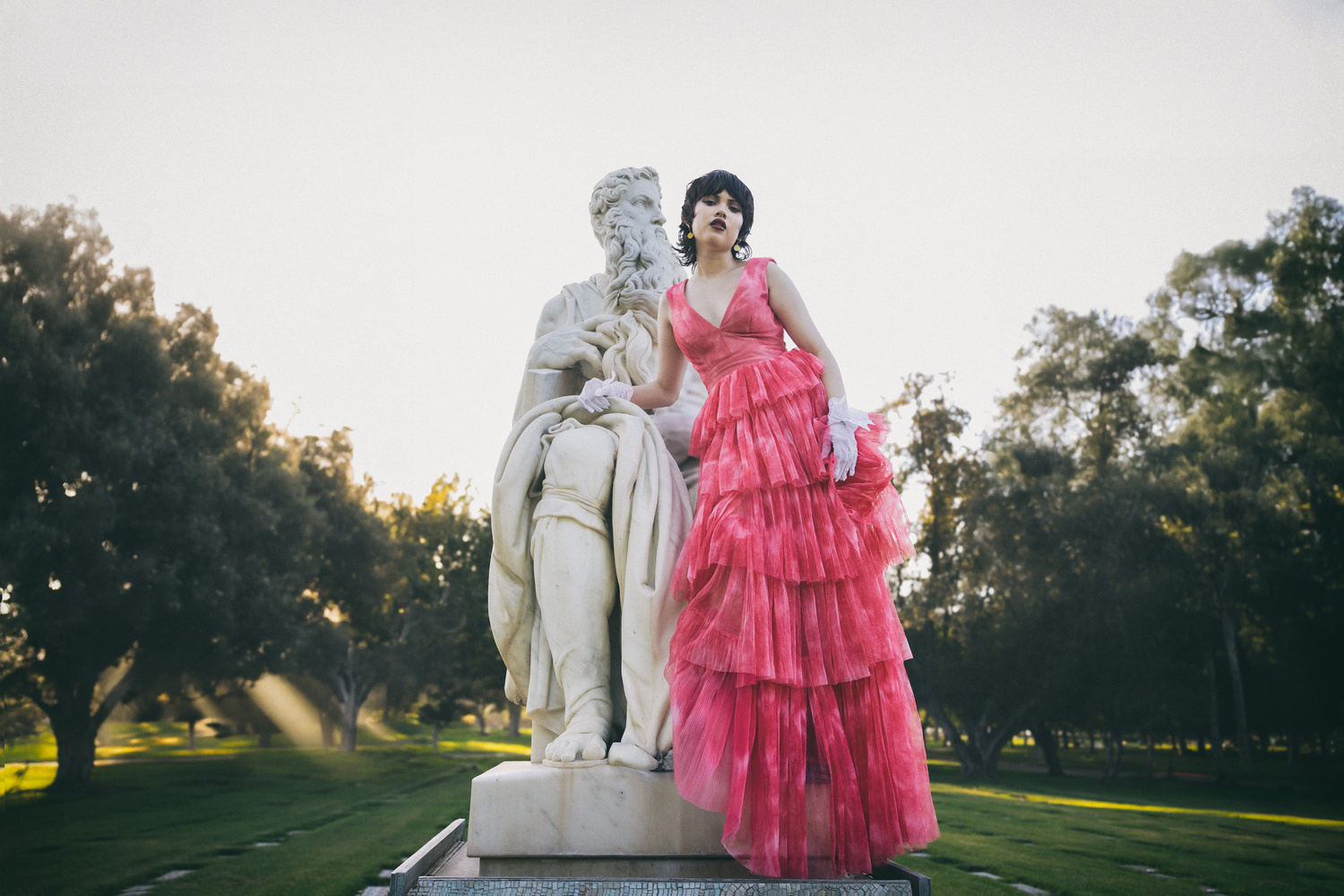
What a Real Mood Board Actually Does
A real mood board sells the room before you even speak. It tells your client or potential collaborator: This person gets it. This person has vision. This person can take chaos and turn it into a strategy. It gives your ideas structure. It gives the team clarity. It gives your client confidence.
Think about it. You’ve got 20 seconds to make someone believe in your idea. You’re either walking into the meeting with a strategy or walking in begging for trust. A persuasive mood board flips that balance. It makes the client want to trust you.
A real board:
-
Builds instant trust because it proves you’ve thought this through.
-
Establishes visual tone so your lighting, styling, casting, and direction feel cohesive before you’re even on set.
-
Creates alignment between you, the client, the makeup artist, the stylist, the publicist, the intern, and the five other cooks in the kitchen.
-
Makes your vision visible, especially for nonvisual people (most of your clients).
I’ve been hired off the mood board alone. Clients paid me to not even shoot. They just wanted the vision. One indie label paid me $2,500 for five pages. For a major label that would be $7,500 minimum. And they didn’t need my camera. Just my brain. Just the layout, structure, and mood that proved I could see the full picture.
Learn how to mood board correctly. Learn the steps and you'll start booking more clients.





Hello Walid!
I have never heard of "mood board" before, so I do not know what that is. You wrote the article as if you assumed that the readers here would already be familiar with this term, but we are not. Could you please take a few moments to tell is, in writing, what a mood board is? I would much prefer to read a definition or description, as opposed to watching a video about it.
Hi Tom, great photos in your profile. Nature photographers are a different breed! To a lot of people a mood board is a pretty board of pretty photos, and to me that's ineffective. A good mood board is a everything for a shoot. It's a fence, it's a map, it's a sales pitch, it's what helps you sell yourself (without really being salesy), it helps you get bigger budgets, etc... I could go and on about it, expand on each but (and you're not going to like this) but the video will give you a lot more insight than a blog post can. I will say this, my ability to make persuasive mood boards has booked me jobs through out my career. Many of those jobs competed against photographers with an agent/manager. I hope you have the time to view this video but if you don't I understand. Either way, I wish you luck and your photos are great.
Walid, thank you so much for responding.
I have learned what mood boards are, thanks to Dennis Hill explaining them in detail in his comment below. I will watch the video that you recommend so that I can learn more.
By the way, I have looked over the images that you have posted here to your profile, and I find your compositions and use of lighting to be most interesting, dynamic, and a whole lot of other superlative adjectives. Haha! You make the kinds of images that I can look at and study for a long time, and I really appreciate that. Thanks for sharing them here!
Tom, My first experience with mood boards was with interior designers. They would pull together actual samples of paint colors, fabrics, flooring, tile, countertops etc and add photos of things like furniture, lighting, and other larger items. They were physical boards. The mood boards were examples of the direction that the designer was headed. It was a visual jumping off point of discussion especially for people who have a hard time visualizing. We artist and creator do visualizing all the time but most people have a hard time doing it. Jump to the commercial world. A brand usually has a very narrow defined look or style. As state in the video, everything from lighting to posing to composition, props, color palettes, etc are scrutinized, discussed, obsessed and argued over long before going on set to photograph. The bigger the brand the more the minutia is dissected. We're talking dozen of people over weeks. In the case of a celebrity you have to consider the star, the agent, manager, PR, lawyers, unofficial advisors as well as friends and family. Then you have the corporate or business side. And don't forget the ad agency as well. So, in the case of Walid he is using mood boards as a way to show and tell as well as sell his vision to a bunch of corporate and business people who have difficulty envisioning his vision as well as the creatives in the room. As someone who does nature photography this may seem like it's coming from left field but look at outdoor ads for example. When you see an outdoor brand in stunning wilderness with the perfect models, lighting, props, tone, style, atmosphere, this was all planned out in advance. Almost every detail planned in advance. The better the planning the more 'authentic' or natural the image appears. This also then allows for what I call 'happy accidents' on set. When everything is so pre-planned that when something on set happens you can explore those options. In the past much of this visualization was done by the ad agency art and creative directors but now it is falling upon the photographer more and more.
Thanks so much Dennis! I really appreciate you explaining what a mood board is. Now that I know what mood boards are, I will read Walid's article again. The first time I read it, most of the things he discussed just went right over my head because I had no idea what a mood board even was. Now that I have a basic grasp of what they are, I think that the things Walid says in this article will make more sense to me.
My impression from watching this video is that Walid's spoken words have greater impact on my perception of the brand, challenges, and solutions than the mood board visuals themselves. Important concepts contained in boards can be overlooked; much harder to ignore a face and voice sitting directly in front of you. As was stated, clients often buy on emotion. For sure. The emotion derived from this video is in Walid's voice. It's a voice of confidence and authority.
So while providing structure to the sales presentation, I can't help but wonder how effective the mood boards would be without the power of the human speaking along with them. Prospective clients are notorious for raising objections, especially those operating by committee, which nearly always puts a detour into my presentations. Person-to-person relationships with actual verbal communication seems essential for securing a new client. Speaking the language of your client is essential, therefore, the hardest part of the work in getting a new client is understanding their goals, problems, and existing perceptions of their brand; otherwise, your vision might never find a home.
That is a very important insight that you give, Ed.
I assume that Walid actually has the ability to present his mood boards to clients/potential clients. When the clients are high-falutin, like Walids, that is something that only the privileged photographers are going to get to do.
I mean, if me, a total unknown, made a mood board for, say, Simone Biles, I would never have a chance to meet or speak to the people who are in charge of her brand. All I could do, at the very most, is hope to get an email address for someone who works in her agency/advertising company and send a digital file of the mood board to them and pray to God that it doesn't just automatically go to their junk of spam folder. Pray to God that they actually see it. In which case, they would have to somehow love it just by seeing it, without me having any chance to present it or talk about it.
So that voice factor that you speak about is completely unavailable to 99.99999% of all of Fstoppers readership who read this article.
This makes me wonder if Walid wrote this article for those who have never photographed anyone famous, anyone with a "brand", or if he specifically wrote it for those who already have some important clients.
Sales, Tom, is a lot like creative photography. It requires a lot of patience, persistence, and imagination. To say that the only way you can advance the process is to send off an email and pray for a reply is a guaranteed strategy for failure. Doesn't matter whether you're trying to sell something to a multinational corporation or the burger joint in your community that you like. Emails largely end up in spam folders.
However, 100% of Fstoppers readers can dial a phone number, leave a voice mail, walk into a corporate home office and leave a business card, or mail a distinctive promotional piece. They might not want to do those things. But it's all a matter of how much work you want to put into the process, and for the most part, artists are not very good sales people. Many sales people are not very good sales people. They drone on and on about themselves, boring a prospective client to tears, without ever learning the language (the needs and problems) of the client.
Dial a phone number? For the people curating the world's top brands? Seriously?
The people who are at the very top of things don't exactly put their phone numbers on the internet for regular folks to find. Nor do they allow the numbers to their offices to be known to the public.
I mean I tried for years and years and years to try to get the phone numbers of ANYONE in an executive editorial position at Field & Stream, Outdoor Life, Big Game Adventures, etc., etc., etc. And of course I just wasn't ever able to get anywhere. Those editors and art directors are very used to hundreds of unknown photographers and writers trying to contact them every year, so they have mastered the art of building walls to keep anyone from being able to get their contact information. And I know from experience that talking to the receptionist or whoever answers the general number does not lead anywhere, because I have misguidedly tried to take that route on way too many occasions.
So let's take the hypothetical example I used earlier, of having a mood board for Simone Biles. If you had such a thing, and wanted to sell it to her team, how in the world would you go about getting the phone number of the person who makes these brand decisions? If you have a way of getting the direct number to the people who actually decide what to use and what not to use for the world's biggest brands (not someone under them because that does not work), then I want to know what it is because I would be employing that method to try to sell my work.
Seriously? YES, Tom, seriously!!!
First of all, it's a myth that people do not want to be found, or that they set up impenetrable walls to shut everyone out. What people do not want to be bothered with is irrelevant noise. I get calls like that all the time... spam calls or emails selling website design services, financial loans or replacement windows for my home. Delete, delete, delete. On the other hand, if I get a salesperson calling or emailing about a brand of paper, I always respond to hear what they have to offer. Always. People at top brands are no different. They still have 24 hours in a day just like you and me, and enjoy engaging with what's relevant for their lives, and avoid what's not. Too busy to take your call? Probably because they're in a hurry to get to the golf course. It's funny how business people who have known me for years always seem to have time to take my call, but other prospects who don't know me are always in a meeting or out-to-lunch when I call. It's all about relationships and relevance.
Secondly, why are we even talking about Simone Biles and top worldwide brands? You don't shoot sports, fashion or portrait photography, so what's the point? There's plenty of work to go around without having to figure out how to contact celebrities. The last thing that's going to help you, me, or anyone else is introducing arguments for the sake of arguing. The real objective is finding contact information for prospects that would be a reasonable fit with the work you do. Forget the celebrities.
1. Think local. Contact local galleries, locally owned bookstores, gift shops, coffee shops... places that might either buy your photos outright or allow you a spot on their wall with a price tag. Any retail establishment might be interested... banks, mortgage loan offices, title companies and realtors; all have conference rooms where they might buy or place your photos for their clients to buy. Make a few matted prints and take them around with you. In those cases, a personal visit accomplishes more than a phone call. A picture is worth a thousand words. See a new office building under construction? Call the developer with their banner on the fence and ask who selects wall art. It'll take a few calls before you eventually find the interior designer, but I've gotten several large orders for wall art at a local hotel, bank, and a couple senior living facilities that I could see as being newly constructed or remodeled. Need more paint jobs? Advertise that you can do small interior projects for a reasonable price in Nextdoor.com, a local online community services site. Photography alone may not pay the bills. Or it could... it's up to you.
2. Think genre. You mentioned a few magazines. I'm not familiar with wildlife publications but I took one that you named, "Field and Stream," and did some quick internet research. The magazine ceased print editions in 2020 but started again in 2024 after the purchase by new owners. Colin Kearns is the Editor-In-Chief and wrote a piece about the print edition, begging you to write him with opinions, and he gives you his email address...
https://www.fieldandstream.com/stories/fishing/all-fishing/editors-lette...
"On that note, I hope to start hearing from you again soon. (My email address is colin@fs1871.com, FYI.) Tell me what you love, what you think could be better, and what you want more of." - Colin Kearns.
The staff directory is here:
https://www.fieldandstream.com/about-us
What more do you want? And you insist that nobody wants to be found? Of course, one email or phone call probably won't land you a lucrative order. But sales is a process. You start with the introduction. Start with an email or snail mail, follow up with a phone call. I can tell you statistically that prospects are about 50% more likely to reply to my email when I combine it with a phone call/voice mail message. Rocketreach.com is an online source for getting contact information, including email and phone numbers. You can get the general email format from their site without paying a dime. Most large businesses use either first initial of first name and last name, or first name.last name followed by the domain name.
https://rocketreach.co/field-stream-email-format_b442b465fa1b61ee
A few searches a month is pretty cheap. If you can't find a direct or cell phone number for the person you're looking for, call the main phone line and ask to speak to so-and-so. More often than not, the receptionist will put you through to so-and-so's voice mail. Be prepared to make a very short introduction. Nobody likes long voice mail messages. Leaving strong voice mail messages is critical. Read a book on technique. Tell the prospect that you'll be sending an email with your ideas, or that you had sent one earlier and seeking feedback. Show and tell them what you're good at; how some of your images are unique or at least slightly different from the hordes of other wildlife photographers. Keep it really short and to the point. Practice your delivery. Find something to bring value to the table... and that's what Walid's mood boards are all about. They separate you from the masses. Ask something about what they need. I suspect most magazines are looking for more than just photographs. They're looking for storytellers... someone who can combine text and pictures of some unique or different theme. Someone who can supplement their internal staff of writers, if they even have them any more. Combine ideas, solutions, and a personal voice, and you're on your way. Above all, it's your choice to do what needs to be done. Look for solutions rather than insisting on obstacles. It takes a fraction of the time to dial a phone call and leave a message than it will for you to write your next Fstoppers comment. Seriously.
Ed asked,
"Secondly, why are we even talking about Simone Biles and top worldwide brands?"
Because this article and the author are all about pitching mood boards to the world's top brands. Just look at his portfolio!
So if the article is about pitching mood boards to the biggest brands in the world, and basically telling the reader, "YOU can do this!" ...... then I, as one of the readers for which this article was written, want to know how I can do what the author tells me I can do.
As far as Field & Stream goes, I did eventually get the Photo Editor there to respond to me, after YEARS of contacting them and never being responded to.
I am now authorized to submit images of Whitetail Deer when they have issue-specfic needs for that species. I was told NOT to submit images of any other species or to contact them about any other species - if they want anything other than Whitetail Deer, they will contact me, please don't contact them.
Ed, this is a lot harder than you seem to realize. When I do finally get editors and art directors to get back to me, it is almost always them telling me that they are not open to submissions from new writers of photographers. They are evidently telling the truth, because when I look at the photo credits in the vast majority of hunting magazines, I only see the same names that I have been seeing for years and years and years. Almost never any new or relatively new photographers. And then when I do get lucky and finally score a sale, the price I get for licensing is $35 or $60 or $80 or a whopping $300 for a cover. Barely worth the time it takes to prepare a submission.
I think that you are not familiar with hunting and wildlife-specific publications and the economics of licensing images to the,. They seem to be far more difficult to get money out of than most other genres of publications. This is probably because there are literally THOUSANDS of amateurs and hobbyists doing this at a very professional level and producing absolute world-class images, but who already have plenty of income from their job or their retirement, and are happy just to be published, regardless of how much, or how little, they get for the licensing rights.
I am not saying it is impossible to get images into these magazines, because I do it rather frequently, but the amount that they pay for such licensing is so low that it is barely worth the extreme effort that it takes.
Nature, landscape and art photography is not exactly easy either. Nothing is. Competition with low-price online stock photography is severe. Landscape calendar publishers pay peanuts too. But if one type of client pays nothing, or shows no interest in my photography, I go somewhere else. Sales is a numbers game. Find the best fit for your work with a sufficient number of prospects, and maintain regular contact. As I've said before, selling is like photography: patience, persistence and imagination pay off eventually.
Quite true.
One tip that successful and semi-successful landscape and nature photographers have told me is to focus on selling within your locality or region. That the local connection is what the potential customers are wanting. That is great advice, but doesn't work for me, because by far the best images I get of landscapes are those that I shoot far from home, in other regions of the U.S. It is hard to market those images because I do not live anywhere near the businesses in that area. And the businesses and gallery here in my part of the PNW don't have any interest in buying images of some far away place. The scenes around me just don't inspire me so I don't shoot local landscapes much at all. So I just accept the fact that if I stick to my standards and only shoot what I want to shoot (not shoot for money) then I am just not going to do very well marketing landscape images. And that's okay because there are literally hundreds of things I would much rather do that try to sell things. I only have about 25 years left to live ... why spend that time doing things that aren't pleasant? And trying to sell photography is definitely not pleasant in the least.
Oh.... don't disregard "someone underneath the boss" as a waste of time. Most projects and decisions are conducted by groups of people, committee-style. Assistants can be invaluable contacts. For one, because they're often easier to reach than upper management. And also because in many cases they're tasked with artist relations. They are the people who will be contacting you with questions. Treat them as if they're the CEO and they can open doors for you.
Another suggestion for getting direct phone numbers:
Send a bunch of emails to your prospects over the holidays, something like the Friday after Thanksgiving. A large percentage will come back with automated replies, such as Out-of-Office until Monday. And some... will have that person's electronic signature which includes their direct phone line or cell number. I get a lot of direct phone numbers that way from people on vacation.
Another suggestion for contacting prospects:
Mail a note card with one of your finest pictures, or a collage of pictures. Seriously: hand-write a note, insert it into an envelope, and stick a stamp on it. No computer labels... hand write the address. People really appreciate that, and it stands out from the daily barrage of spam calls and email. There are many traditional forms of advertising that still work.
Excellent suggestions, Ed! Thanks so much.