Creating flattering portraits isn’t just about telling someone how to stand. The way you position your subject, the lens you use, and the angle you shoot from all come together to decide how your subject actually looks in the final image. Small changes in these areas can completely transform how someone appears, which is why learning to control them matters so much.
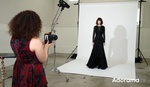
Coming to you from Lindsay Adler Photography, this practical video explains how posing, focal length, and perspective all interact. Adler begins by pointing out a principle that seems obvious once you hear it: whatever is closest to the camera appears larger. That single fact affects everything, from how a hand looks when it’s extended toward the lens to how a subject’s face appears if they lean in. It’s not just about where you place your subject, though. You also need to consider your own position. A high camera angle can slim down proportions and bring attention to the face, while a low angle can create a sense of dominance or height.
Adler also demonstrates how focal length shifts perception. A wide angle lens exaggerates whatever is nearest, so a hand, foot, or head can suddenly appear outsized compared to the rest of the body. A longer focal length, by contrast, compresses distance and creates more even proportions. This choice isn’t about right or wrong, but about control. You might want to emphasize a feature, or you might want to balance everything. The key takeaway is that focal length changes perspective, and perspective is a tool you can use deliberately.
These principles get more interesting when combined. Adler shows how leaning a subject toward the lens, then switching between a wide angle and a longer lens, produces dramatically different results. The wide angle makes the upper body look much larger compared to the legs, while the longer lens balances everything out. This flexibility gives you options whether you’re aiming for dramatic fashion images, a softer portrait, or something in between. What matters is knowing how the pieces (pose, perspective, and focal length) work together so you can choose the look that best fits your subject and the purpose of the shoot. Check out the video above for the full rundown from Adler.
If you would like to continue learning about the art of portraiture, be sure to check out our range of tutorials on the subject in the Fstoppers store.