
In addition to new capabilities like a dedicated bird autofocus mode that bring the Z6III’s capabilities in line with cameras like the Z8 and Z9, Nikon’s new firmware 2.0 brings an added, likely overlooked, feature that is worth pointing out.
When I was growing up, there was a saying: “Believe none of what you hear and only half of what you see.” It was a sleek way of urging you not to jump to conclusions and instead look deeper at a situation before automatically taking everything at face value. Now, it can be easy to take that old adage a little too literally, to the point where people stop believing that 1 + 1 = 2. But in the information technology age we are leaving, and the AI age into which we are entering, it seems as though even believing 50% of what you see might be optimistic.
It is simply so easy these days to manipulate things to your own end. When all you are doing is removing a pimple from a model’s face before sending an image to print, that’s one thing. But not everyone’s intentions are so pure. We now live in a world where you can create images of real people doing (seemingly) real things in real locations that, in reality, that person has never even been to. AI and advanced Photoshop techniques make it possible, even easy, to create a false view of reality. And, as consumers, it can often be very difficult to say what is real and what is fabrication. Only more so in the age of AI, where you don’t even need Photoshop to accomplish the magic trick. Just put together a simple prompt, an image sample, a voice sample, or other mundane assets, and you can spin an entirely false narrative from the comfort of your own living room.
This is particularly important when it comes to the news. When I was growing up, the news (print, radio, television) was largely a trusted public resource. Definitely, you had certain outlets with questionable ethics. But, by and large, journalism required a rather stringent ethical standard. Most people trusted the news—at least to the point of the earlier quote. And niche news services (ones built specifically to cater only to certain segments of the population) were the exception rather than the rule. To quote Jack Webb from the old Dragnet series: “Just the facts, ma’am.” That was the ideal of the news. Not to say that was always accomplished, but it was widely accepted as the goal.
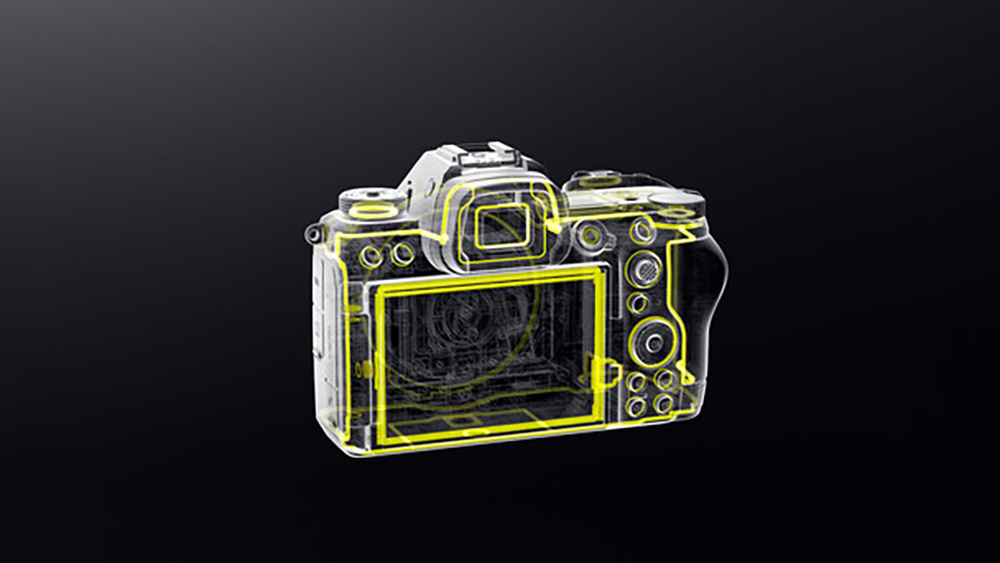
We now live in a world where people have begun to question the news. Sometimes for good reason. Sometimes not. But it has become harder and harder from a journalism point of view to provide people with the facts they deserve while still having your voice heard over a vast sea of opinion.
The C2PA took one small step to address the trust issue when it introduced an initiative a couple of years ago to start integrating image provenance authentication into digital cameras. Essentially, the function adds metadata to an image that establishes things like what equipment was used to create an image, a digital signature, and other data that makes it easier to verify whether an image has been tampered with prior to publication.
If you’ve ever shot for a newspaper, you’ll know that many of the most prominent ones have strict guidelines on post-production. Usually, anything more than minor cropping isn’t allowed. The idea is that if you are printing an image as news, it should actually be a 1:1 representation of what occurred, not an artist’s rendering. This new camera functionality allows users to enable a sort of double-check system. It’s optional to use, but it’s an excellent way to protect all parties involved. Publications can prove with receipts that what they are showing has not been manipulated. Photographers have proof for anyone questioning their ethics. And the public has a standardized way of verifying if what they are seeing with their own eyes is truly valid.
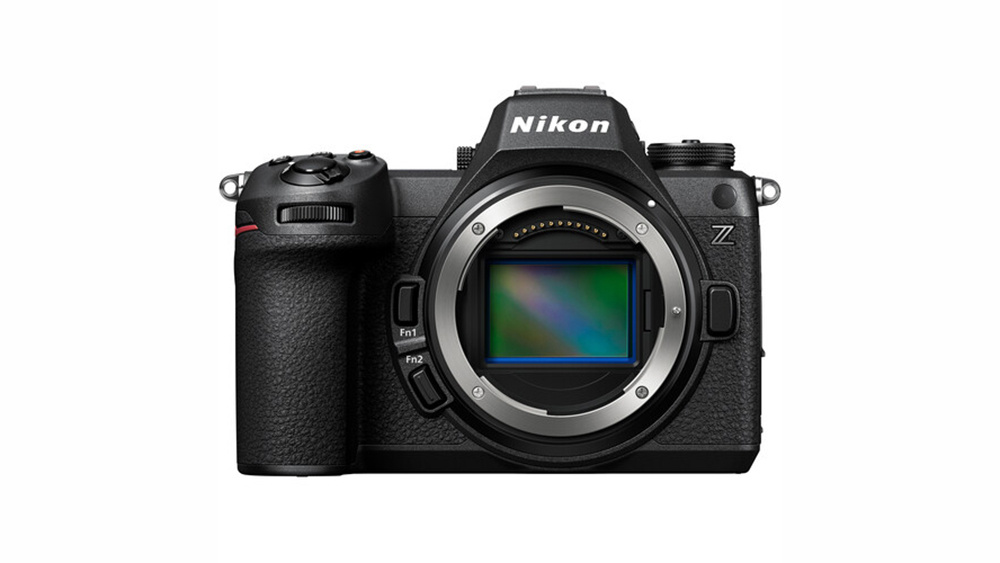
I go on this long diatribe obviously because this is now a feature in version 2.00 of the firmware for the Nikon Z6 III, making it the first Nikon camera to have such capabilities. Part of the Nikon Authenticity Service, by making a prior request through Nikon Imaging Cloud, users can load the digital certificate necessary for recording provenance data onto their Z6III. If you then use C2PA-compliant editing software, you can generate a paper trail showing any additional edits made to an image from capture to presentation. That way, all interested parties can verify that no misleading edits have been made.
Now, to be clear, this doesn’t make it impossible for people to generate misleading images. And, as I mentioned earlier, in the age of AI, most people won’t even have to leave the house in order to do so. But in a time of instability, universal access to verifiable facts is more important than ever, and the news remains the most established source for this sort of information. Providing news providers a better way to “show their receipts” and consumers a source to verify what they are seeing makes for a better future, especially one where fully artificially generated AI images will be competing for our attention.
Like I said, this is not the only addition in firmware 2.0, which also includes a dedicated bird AF mode for tracking our flying friends, an auto capture function for triggering remote cameras, as well as:
-
An [Automatic Monitor Display Switch] function for disabling the eye sensor when the vari-angle monitor is deployed.
-
A function that allows users to exit the zoom view with a half-press of the shutter-release button when the focus mode is set to manual.
-
Pixel shift shooting can now be used in combination with focus shift shooting or AE bracketing settings for more precise photographic expression than ever before.
-
A [Recall Shooting Functions] option that allows users to recall previously stored settings—including shooting mode, shutter speed, aperture value, and ISO sensitivity—with the press of a button has been added to the roles that can be assigned to a custom control.
-
Adds support for USB streaming (UVC/UAC), which allows the camera to be used as a webcam by simply connecting it to a computer or smartphone.
-
By default, firmware updates are now installed automatically after the camera connects to Nikon Imaging Cloud (a note about setting the camera’s date and time has been added to the instructions for connecting to the cloud to prevent connection errors between Nikon Imaging Cloud and the camera).
-
Operation has been simplified by automatically displaying an update confirmation dialog on the camera monitor after registering an imaging recipe in Nikon Imaging Cloud.
A lot of strong improvements for an already strong system. But for me, this step toward the authenticity of the photographic image may have an even more lasting impact.
To download the new firmware for free, click here.



I started losing interest in this article rather quickly as the point of the article wasn't revealed until after several paragraphs. Just a polite suggestion: next time, make your point in the first paragraph, then embellish afterwards.