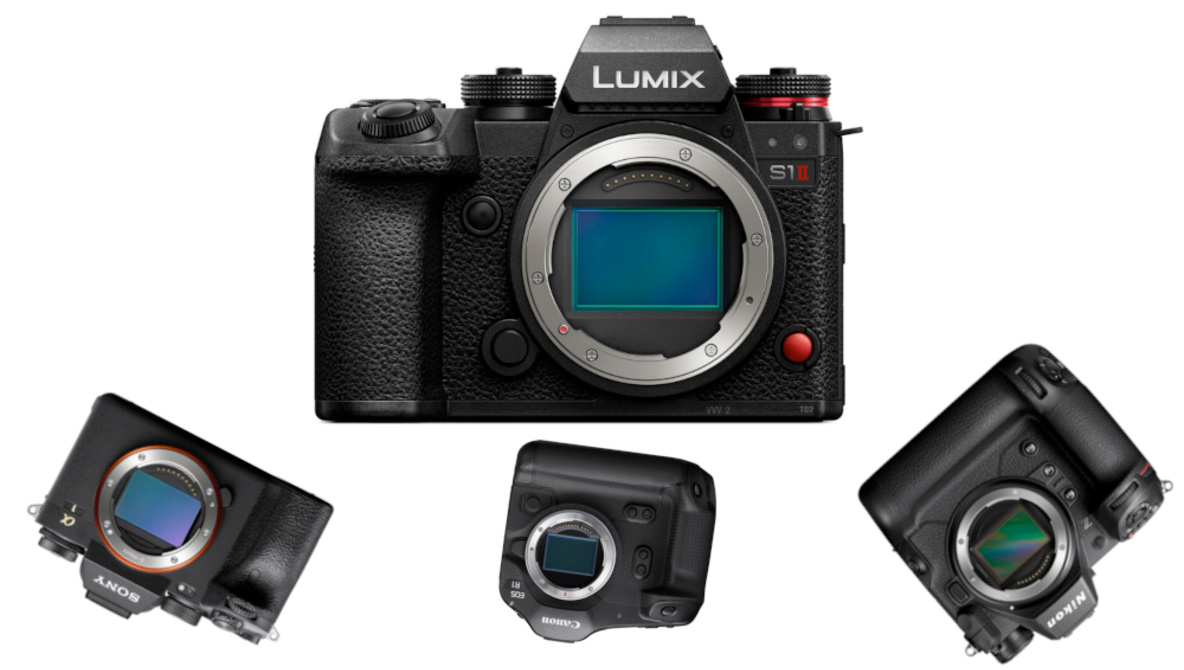
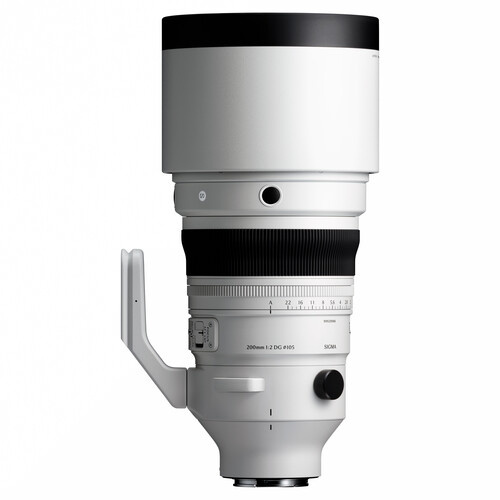
Every so often, a product launch doesn’t just release something new. Rather, it changes the tone of an entire ecosystem. This is what Sigma has just done with two lenses that, on their own, would be remarkable, but together feel like a tectonic movement. And they show that the big three (Canon, Nikon, and Sony), might be on notice.
To put it bluntly, these prices are not just competitive; they are disruptive. Canon’s EF 200mm f/2L IS, introduced in 2008, cost around $5,699 at launch, and even today, used models hover in the $3,500–$4,500 range. Nikon’s equivalent, the AF-S 200mm f/2G VR II, has always been in that same territory. But Sigma? A brand-new 200mm f/2 for $3,299? That’s nearly half price for a category-defining lens.
 Then comes the 300–600mm f/4. This isn’t even a category that the big three cover directly. Canon and Nikon each offer 600mm f/4 primes, and they live in the stratosphere, both costing around $14,000. Sony’s 600mm f/4 G Master sits firmly in that range too. Sigma is now offering not a prime, but a stabilized, flexible zoom covering 300 to 600mm at f/4, for $6,600. That is less than half the price of the big players’ primes, with the added versatility of covering multiple focal lengths.
These aren’t quiet releases. They are declarations. They signal intent not just from Sigma as a lens maker, but from the L-Mount Alliance as a whole. Because lenses like this don’t exist in a vacuum. They exist to feed cameras, to build systems, to give ecosystems legitimacy. And right now, the subtext behind Sigma’s audacious pricing is loud and clear: the L-Mount is preparing to make a serious run at the flagship market.
Sigma’s Price Shock: The Cost Curve Cracks
Let’s linger on these prices, because the shock is the story.
For decades, fast telephoto lenses have been aspirational objects. They’ve lived in the stratosphere of pricing, accessible mostly to agency sports photographers, wire shooters at the Olympics, or wealthy hobbyists. The logic was simple: the combination of long focal length, fast aperture, and razor-sharp optics required such specialized engineering that only the big three could deliver them, and only at five-figure prices. They weren’t priced to sell broadly; they were priced to extract maximum value from institutions that had to buy them regardless of cost.
Sigma just ripped up that logic. The 200mm f/2 at $3,299 doesn’t just undercut Canon and Nikon—it undercuts the entire idea that such a lens should be a status symbol. It reframes it as something accessible, attainable, usable by ambitious creators who aren’t backed by wire services. Imagine a wedding photographer wanting the compression and bokeh of a 200mm f/2 for dramatic portraits. Imagine an indoor sports shooter who doesn’t work for Getty Images but covers college basketball for local outlets. Sigma has just made those visions affordable.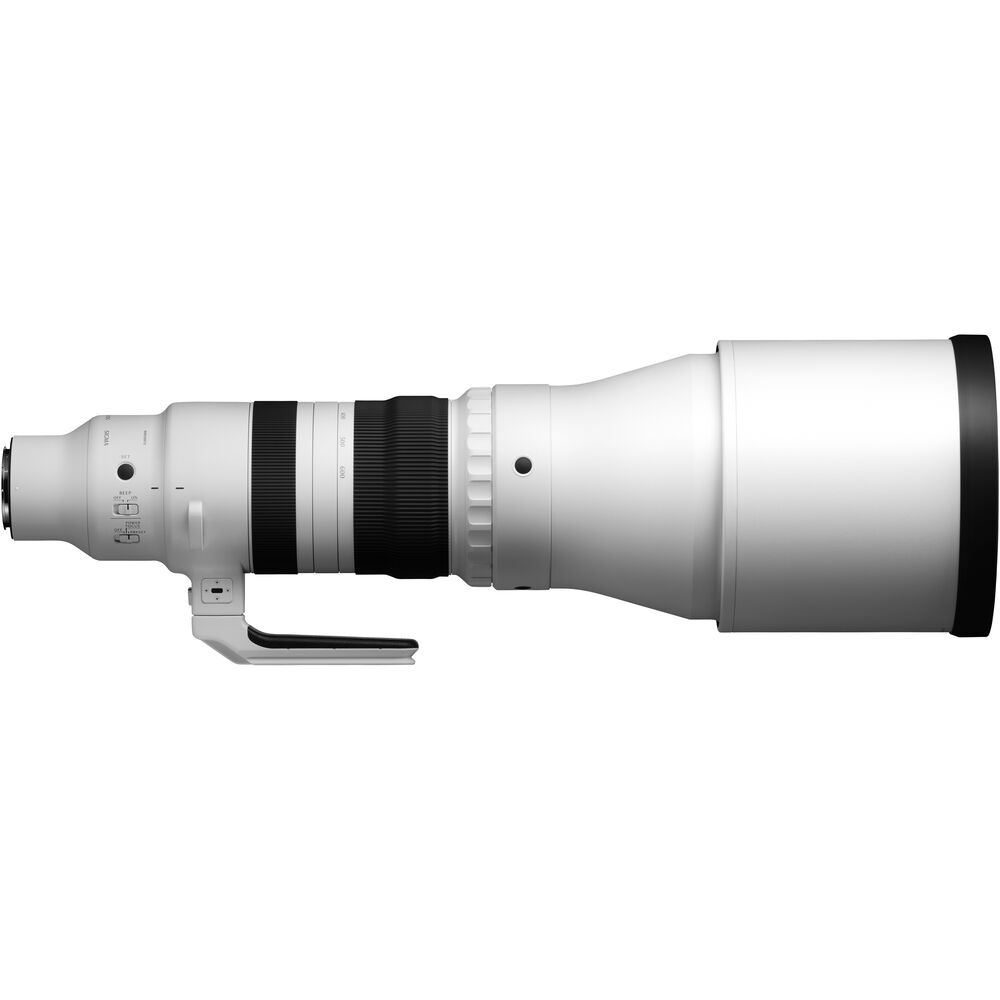 And then the 300–600mm f/4. To understand its importance, consider that a 600mm f/4 prime is a once-in-a-lifetime purchase for most individuals, if it’s even possible at all. Rental houses stock them, and daily rates can be hundreds of dollars. Buying one outright is usually the province of institutions. Sigma has effectively halved the buy-in, and in doing so, doubled the potential user base. The fact that it’s a zoom, letting a wildlife shooter cover 3000-600mm, the range of four traditional supertelephoto primes, without swapping, is just icing on the cake.
This is more than just competition. It’s ecosystem gravity. Affordable flagship-class lenses don’t just exist for their own sake. They pull people into systems. They encourage adoption. They create legitimacy. Which raises the obvious question: if Sigma is providing flagship-class lenses at half price, who in the L-Mount Alliance is going to provide the flagship-class body to match them?
Panasonic’s Strategy: Building Steam Toward a Flagship Push
That’s where Panasonic comes in.
Panasonic’s presence in the L-Mount Alliance has always been strategic. When Leica opened the mount in 2018, it needed partners who could build scale. Leica itself is a boutique operation; it doesn’t ship in volume. Sigma could supply lenses, but it doesn’t have the infrastructure to push bodies at scale either. Panasonic, with its long history in the video and hybrid market, was the logical engine.
For years, Panasonic has built its reputation around hybrid cameras—tools that serve both stills and video creators. The GH series in Micro Four Thirds carved out an enormous niche among filmmakers. When Panasonic stepped into full frame with the S1 and S1R in 2019, it was clear they wanted to bring that hybrid DNA into L-Mount. But those first cameras were heavy, somewhat slow, and niche compared to the rising dominance of Sony’s Alpha line.
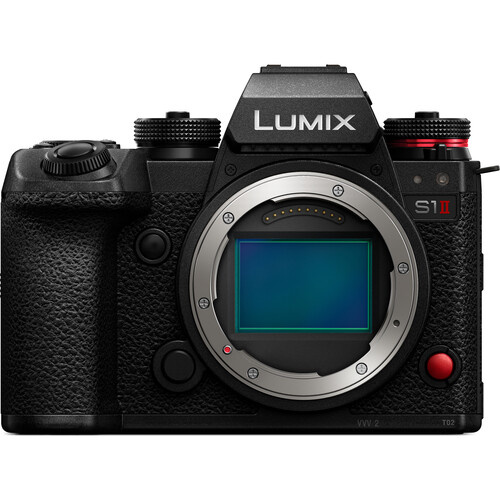 Fast-forward to 2025, and Panasonic is no longer tentative. The Lumix S1II and S1IIE, launched in the middle of the year, represent a clear sharpening of strategy. These cameras are no longer experiments; they’re tools aimed directly at hybrid shooters who want performance without compromise. Stacked sensors, high frame rates, and serious video specs make them credible competitors in their own right.
But a flagship isn’t just about a body. It’s about the pairing of body and glass. And that’s why Sigma’s lens announcements are so provocative. The 200mm f/2 and 300–600mm f/4 don’t just slot into the L-Mount catalog, they transform it. They give Panasonic’s bodies the optics they need to be taken seriously by professionals. Without lenses like this, Panasonic can’t credibly argue with Sony’s a1, Canon’s R1, or Nikon’s Z9. With them, the conversation changes.
The timing feels deliberate. Sigma drops world-first lenses at disruptive prices. Panasonic releases hybrid bodies that suddenly look like they could anchor a flagship system. Together, it feels less like coincidence and more like choreography.
Why Panasonic Outpaces Leica in the Flagship Race
If there is going to be a true flagship challenger from the L-Mount Alliance, it won’t come from Leica. Leica’s role in the Alliance is foundational. They designed the mount. They set the standards. They provide the prestige and the pedigree. Without Leica, there is no L-Mount Alliance. But Leica has never been about mass competition. Their cameras are expensive, niche, designed as much for brand identity as for volume. A Leica SL2 is beautiful, but it’s not priced or marketed to challenge a Canon R1.
Panasonic, by contrast, has the infrastructure and the intent. They are the ones who build cameras in volume, who support hybrid shooters, who release firmware updates, who push into price bands that working professionals can realistically access. Sigma provides the glass, Leica provides the foundation, but Panasonic provides the bodies that will make or break the Alliance’s challenge to the big three.
Ecosystem Chess: How Leica, Sigma, and Panasonic Align
The L-Mount Alliance only works because each member plays a specific role.
-
Leica is the architect. They created the mount, maintain its standards, and provide the brand prestige that makes the system credible. Without Leica, L-Mount would be just another third-party standard. With Leica, it has heritage.
-
Sigma is the disruptor. They supply lenses at a pace and price point that neither Leica nor Panasonic could match. Their catalog is vast, and their willingness to experiment gives the system its wow factor.
-
Panasonic is the executor. They build the bodies, maintain the infrastructure, and give the Alliance its volume. They are the engine that ensures L-Mount isn’t just a boutique option but a living, breathing ecosystem.
Together, the pieces fit. Leica legitimizes. Sigma tempts. Panasonic activates. The beauty of this arrangement is that no one company has to do everything. Leica doesn’t have to build volume. Sigma doesn’t have to make cameras. Panasonic doesn’t have to supply every lens. Each member plays to its strength, and the sum is stronger than the parts.
And now, with Sigma dropping lenses that scream “flagship,” Panasonic is the obvious candidate to answer with a body that can match them. This is ecosystem chess, and the board is starting to look very interesting.
Flagship Gravity: Panasonic Is the Challenger
Flagships aren’t defined just by specs. They’re defined by gravity, the pull they exert on the market. The Sony a1, Canon R1, and Nikon Z9 don’t just sit at the top, they set the terms of debate.
For the L-Mount to have that kind of gravity, it needs two things: flagship-class lenses and a flagship-class body. Sigma has now provided the lenses. Panasonic is halfway there with the S1II. The missing piece is the unambiguous flagship: a body that sits at the top, that says “this is the best we can do,” that gives professionals no excuse to dismiss the system.
This isn’t a fantasy. It’s the logical next step. Sigma’s lenses demand it. Panasonic’s trajectory points toward it. And the Alliance, if it wants to be more than a curiosity, needs it.
If and when Panasonic delivers that body, the gravity will shift. L-Mount will go from being an interesting alternative to being a serious competitor. And that shift will reverberate through the industry. After all, remember that of the big three mounts (Canon RF, Sony E, and Nikon Z), you can only put the two aforementioned Sigma lenses on Sony E mount, and they're hampered by reduced frame rates there. That means the L mount will essentially have exclusive lenses to pair with that flagship body.
Why This Matters Now
First, there’s accessibility. A 200mm f/2 at $3,299 is no small purchase, but it’s within the realm of possibility for ambitious freelancers, small studios, or well-equipped enthusiasts. A 600mm f/4 prime at $13,000 is not. By halving the entry cost, Sigma has made flagship-class optics something that more shooters can realistically own. Canon, Sony, and Nikon supertelephoto lens prices became notably more expensive in their latest generations, while Sigma went the other direction, creating a gap that can't be ignored.
For years, the cost (and mere existence) of lenses has been the biggest barrier to leaving Canon or Nikon. If Sigma’s L-Mount glass provides equivalent performance at half the cost, that barrier starts to crumble. Suddenly, switching looks not just possible but appealing.
Every movement has its defining moment, the point where it goes from speculation to reality. For the L-Mount Alliance, that moment will be the release of a true Panasonic flagship. Picture it: a body with a stacked or global shutter sensor, blistering autofocus (this will be a big test), 30 frames per second bursts, 8K video, the works. Pair it with Sigma’s $3,299 200mm f/2 and/or $6,600 300–600mm f/4. Suddenly, you have a system that doesn’t just compete. It compels.
Is that moment coming? Possibly. This could all be a coincidence. However, it certainly seems like a logical move. Sigma’s lenses demand it. Panasonic’s trajectory suggests it. If it arrives, it will feel less like a surprise and more like the culmination of years of careful strategy.
And if it does, the industry will have to reckon with a new reality: flagship no longer means Sony, Canon, or Nikon by default. It might mean Panasonic (and Sigma) as well.
The L-Mount Alliance has always been an oddity, a partnership between three very different companies with very different strengths. For years, it felt like an experiment. Interesting, but not threatening. Now, it feels like something more. Sigma’s lens pricing has cracked the cost curve wide open. Panasonic’s bodies have matured into credible hybrids. Together, they’re not just filling space; they’re creating momentum.






I like Panasonic and Sigma. So I try to support both companies when possible. I didn't buy into the Lumix S series originally because the S1 was huge (1kg!) and lacked PDAF. With the latest S bodies comparable to Sony in weight and now having PDAF, I would consider switching to L-mount.
I think that Laowa is the long shot in the lens disruption race. Their AF 10mm F2.8 is a great lens at a reasonable price. They will introduce a AF 200 F2 in Z mount in the next month of so and it has the same style as the 10 mm lens. Beautiful. I don't need a fast 200 but if the price is reasonable for a Chinese lens, GAS may get the better of me.
This post could not have come at a better time. Many of us canon and shooters are tired of being dictated at what lenses we should be able to have. My r62 is getting sold and I just bought a s9. I've spent the last 4 months being introduced to the wonderful world of all of sigmas lenses being available for full frame. And I don't even need to carry around a big S2 or s1, because they for all intents and purposes are bricks. Honestly it makes you appreciate Canon's design sense and nikons ruggedness. Regardless Panasonic is putting themselves in a really good spot. You're meant to high-end cameras are much better, and the S9 I swear is the next best thing and small full frames which will eradicate the whole point of r62 or even z52.
Especially since both of those will not have full access to sigmas lenses.
Being out of Canon lens jail is amazing. I don't have to be a r1 toting commercial photographer professional to see that Cannon is treading on thin water right now. Sony is the everything generic platform. So if you have problems with either of those l mount is coming to save you more or less. I'm not getting rid of my R5 ever, don't need version 2, and my stable of EF lenses will be my mainstay unless Canon comes up with something more than v lenses or 3300 rehashes of lens we have already.
It's not McDonald's but I am loving it 😁
PS - my other R5 toting friend just bought a Sony for its video capabilities and ridiculously sticky af. We're seeing lensesls releases every week that are simply not available in Canon full frame and we've been pissed for a long time. But yeah Canon executives can high-five themselves because lock-in is the best strategy.. lol sure.
I will seriously consider switching if Sigma could release tilt-shift lenses. It's a shame that only Nikon, Canon, Fuji GFX and Laowa (with inferior optical quality) have released this type of lens.
I am sorry but I think the idea that this will benefit Panasonic, and the L-mount alliance is based on one false assumption, and that is, that as long as Sigma make these lenses for E-mount, that people don't just buy them and slap them on a Sony camera.
It is good, that Panasonic and the L-mount alliance get some good glass, but it won't change anything, as long as Sigma is betting on two horses.