
Come on, hop in those comments and tell me why I'm wrong.
Push-Pull Zooms Are Awesome
Push-pull zooms earned a reputation they didn’t deserve. The internet shorthand is “dust pumps." In real life, the single-barrel slider is a speed advantage you can feel immediately. One hand rides the lens, you nudge forward for tighter framing, back off for context, and you never take your eye out of the viewfinder or your finger off AF-ON. The mechanics suit how decisive moments actually unfold: you recognize the frame, correct in a quarter second, and shoot. There’s no hunting for a tiny ring, no counter-rotations when your gloves are on, and no juggling your grip when the subject reverses direction.
Ergonomically, push-pull is honest. The lens tells you what it wants: shove for longer, pull for wider. When you’re tracking on sideline sports, wildlife, air shows, or events where people move unpredictably, that matters more than ornamental elegance. It also plays well with real stabilization technique. Your left hand can brace high on the barrel for better leverage, your right hand stays relaxed on the body, and tiny framing corrections become linear muscle memory. On gimbals and monopods, the quick throw is the difference between “got it” and “ugh, if only.”
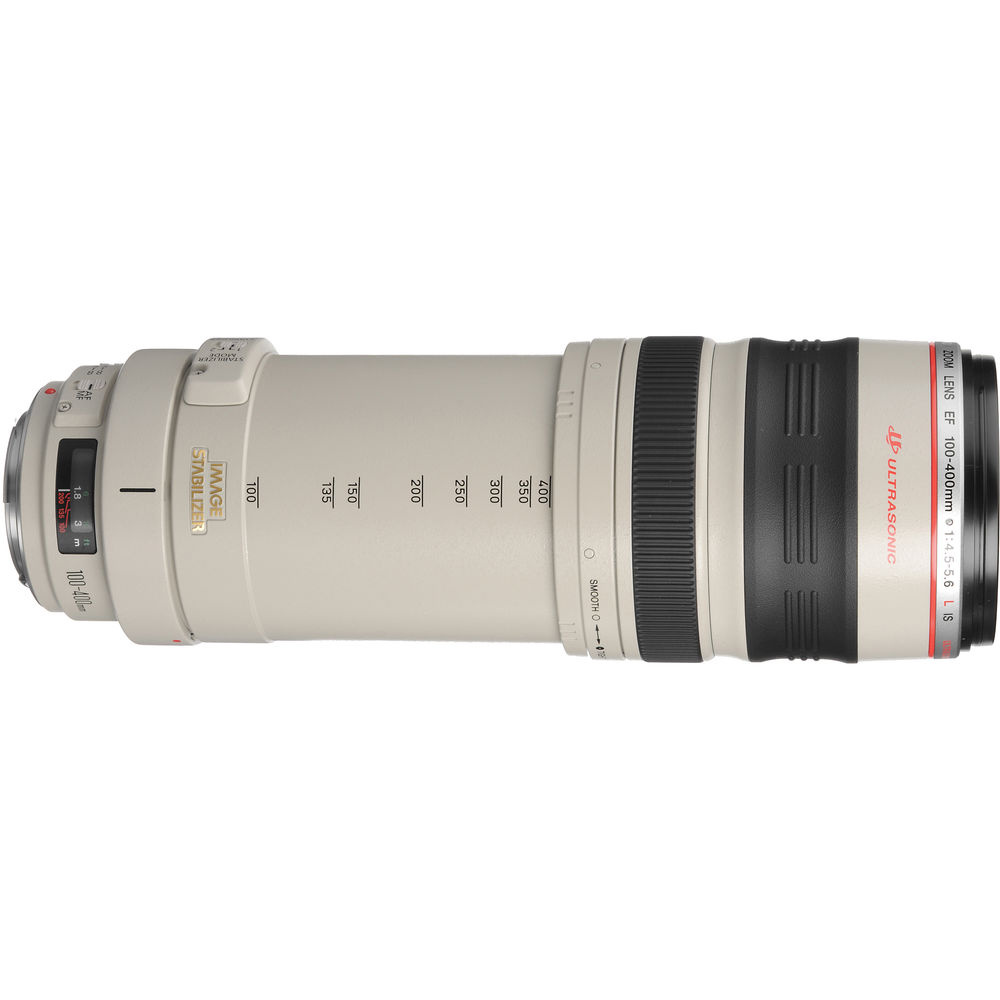
There’s also a creative upside: push-pull encourages dynamic framing. You can “ride” a zoom during a burst to shape a sequence—tight, wider, tight again—without breaking cadence. For storytelling, that gives you the cutaways you want while the subject is still in the same emotional arc. It’s a way of editing in-camera.
If Canon ever makes another push-pull zoom, it'll be in my bag on day one.
All Cameras Should Have Internal Storage
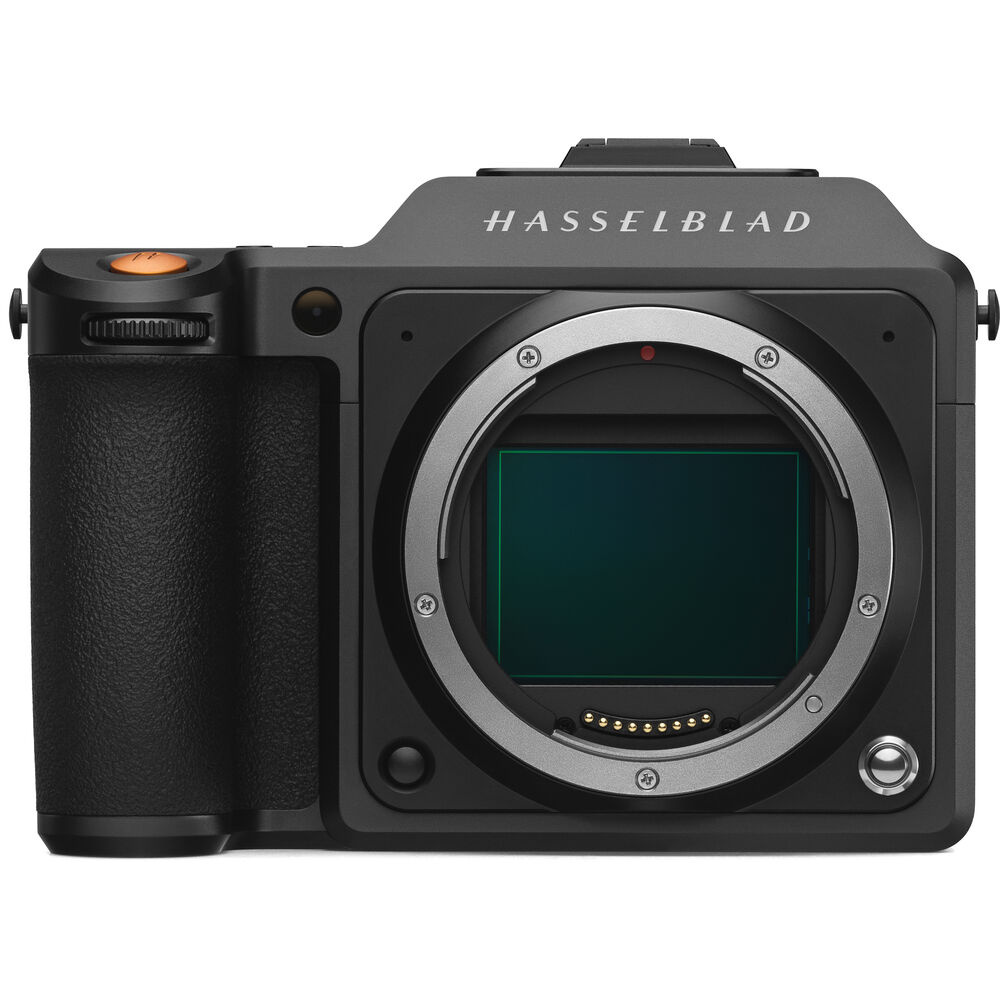
Smartphones solved “where do files go” years ago. Cameras still pretend it’s 2007. Built-in storage would quietly eliminate the most avoidable failure in photography: forgotten, full, mismatched, or corrupt cards. And it would make workflows more convenient. Internal storage isn’t about replacing removable media; it’s about a factory-installed safety net that always exists, never gets lost, and never stays in yesterday’s reader after a midnight export.
The immediate wins are boring in the best way. You arrive at the venue and start shooting even if the card case is still on your desk. You can spill a “last hour” buffer automatically to internal while your primary slot writes, so a card failure or a clumsy ejection costs you annoyance, not a meltdown. On long days, a “roll-over” option lets the camera seamlessly keep recording to internal when Card 1 fills, then alert you with a subtle status change. For hybrid shooters, internal storage doubles as proxy land: the camera can write small review files internally while the high-bitrate masters hit your card, providing instant culling on the ride home.
Supertelephoto Zooms Are Making Supertelephoto Primes Obsolete
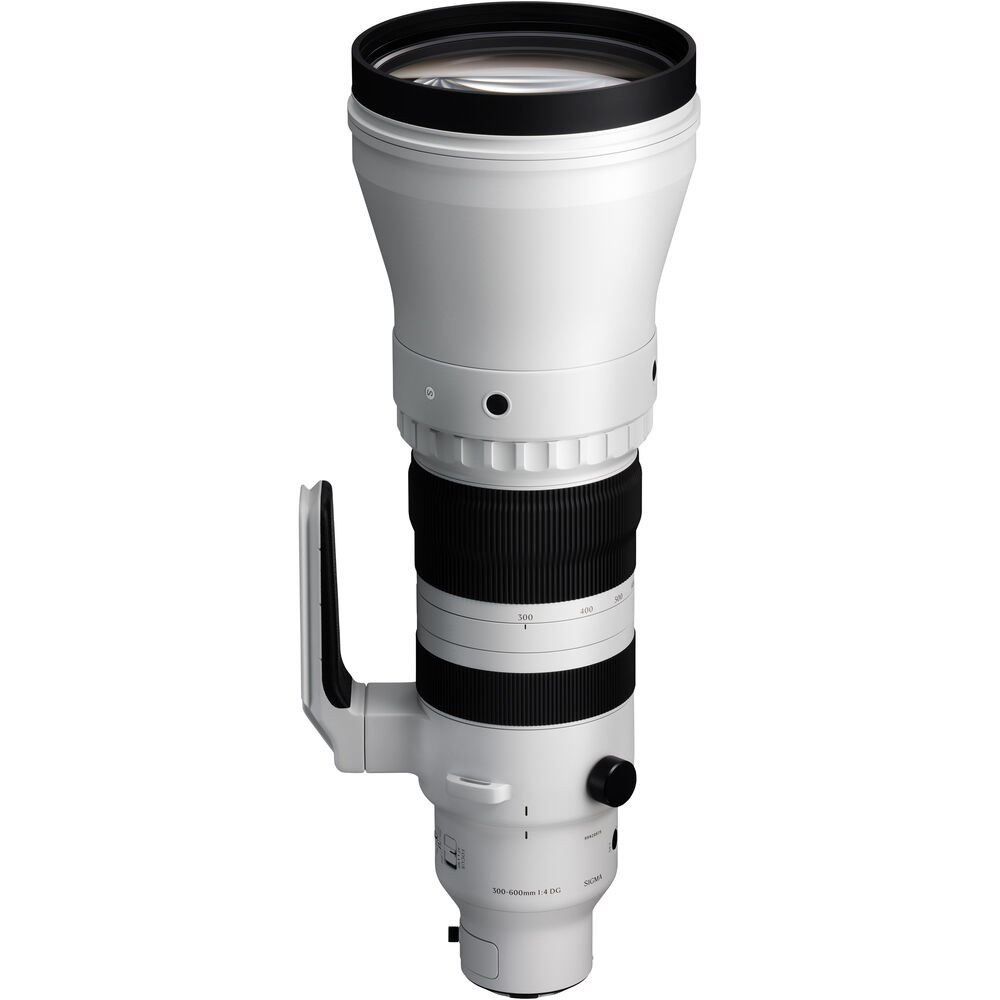
A decade ago, “serious” long-lens work meant a trunk-filling prime and a second mortgage. Today’s 100–400mm, 150–600mm, and 200–600mm zooms are so sharp, so well stabilized, and so consistent across the range that for most wildlife and field sports, they’re not just “good enough, ”they’re the smarter buy. You get real-world reach flexibility without moving your feet, internal or near-internal focusing that keeps balance sane as you track, and optical designs that stay crisp at the long end instead of gasping. Crucially, you also get to bring the lens you actually use, not the one you talk yourself out of carrying.
Zooms win on coverage. The hawk doesn’t care that you paid for f/2.8 on a 400mm if it lands at 320mm. A player doesn’t cut exactly to your prime’s fixed angle. With a modern supertele zoom, you frame what happens, not what you hoped would happen, and you do it while keeping the subject large in the finder so AF can lock with confidence.
Robust Wireless Should Be Standard: Cloud Upload, Remote Control, and Multi-Body Time Sync
Cameras are still strangely shy about the very thing the modern workflow is built on: wireless. Robust, everyday features, like reliable remote control, background cloud uploads, and rock-solid multi-body time sync over Bluetooth/Wi-Fi, should be standard from entry-level to pro. These aren’t “flagship luxuries.” They’re the wiring that keeps jobs moving, clients looped in, and teams aligned.
Start with remote control. A camera that connects quickly to your phone and stays connected changes how you scout, light, and shoot. You can place the body on a boom in a small room, reframe from the doorway, adjust exposure without climbing a ladder, and trip the shutter without awkward timers. A decent live view on a bright phone screen beats squinting into an LCD in high sun. I shoot a lot of classical music concerts, which requires me to be totally silent. I learned to put a second camera closer to the stage and control it from my phone, and I was able to get shots I never could before.
Now think about cloud. A silent, background uploader that sends 2 MP or 4 MP previews as you shoot means your editor or social person can start selects in real time from another city. Weddings and events can push highlight reels to a private gallery before dessert. Commercial teams can confirm that a layout is working without hovering behind your shoulder. You still keep the masters on your cards; the cloud gets “review copies” that move the day along. If you’re on location with spotty signal, the camera queues and sends when you hit Wi-Fi at lunch. That being said, if you have a good Wi-Fi system, there's no reason you couldn't upload full copies. Modern Wi-Fi has more than enough bandwidth.
Time sync is the quiet hero. If you’ve ever tried to align three bodies’ worth of files after a 14-hour day, you know why. Multi-body Bluetooth time sync means every file shares a clock down to the second, so “sort by capture time” interleaves a story perfectly. Interviews from Camera A slot between cutaways from Camera B and detail shots from Camera C with no manual nudging. Dual shooters at a wedding can dump cards into one folder and have a timeline that reads like a documentary script instead of a puzzle.
“But battery.” That’s the default objection. Background radios draw some power, but sensible implementations amortize the cost. Bluetooth LE maintains a low-energy tether to your phone and other cameras. Wi-Fi wakes only for transfers.
Lens Hoods Should Be Included With Every Lens
This is the hill to die on, and it shouldn’t even be controversial. Lens hoods are not optional “accessories”; they’re part of the optical system and the first line of physical defense. A proper hood reduces flare, preserves contrast, and keeps stray light from washing out your colors. It also protects the front element from dings, raindrops, and accidental fingerprints, which means you clean coatings less often and risk micro-scratches less. Hoods make your images better and your gear tougher. Ship them with every lens, from entry kit to halo prime.
The argument against including hoods is thin. “People don’t use them.” Then teach them why they should. “They add bulk.” True—so design smart. Collapsible hoods for travel zooms, petal hoods for wide angle lenses, deep cylindrical hoods for teles, and rotating “trapdoor” hoods with windows for polarizer access. Hoods don’t need to be heavy or clumsy, and they don’t need to be a separate line item on a receipt that already hurts.
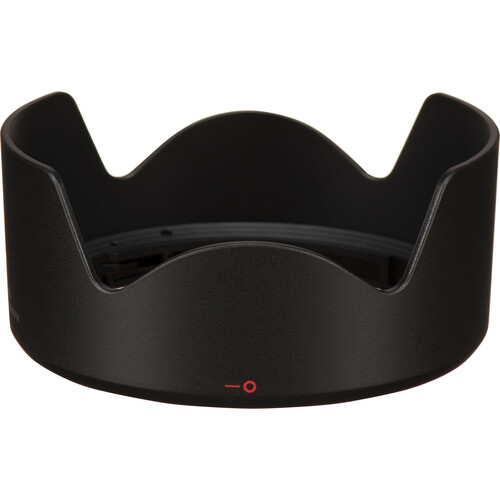
Seriously, the cost of manufacturing a hood is laughable compared to the lens itself. Just include it.
Start Your Engines
Ok, that's it. Hop in those comments and tell me why I'm wrong.





About the internal bank verses a SD? Who's to say the internal HD won't fail eventually too. Another draw back, I'm assuming you have to hook up your whole camera to your computer, instead of just popping out your SD-Card. Plus how much internal memory does, or can it have? When you have an SD you can swap one 256GB for yet another 256GB card. Yes I've had SDCard failures, but I paid for this "Ease US Data Recovery Wizard" years ago and it has never had a problem restoring my RAW files from SDCard to my hard-drive. Even more recently on my last trip, one my 128GB drives, for some reason, when I popped it into my Windows computer, just said hey you need to format. D'oh, but Ease US restored everything. I doubt you can feel safer just because you have internal storage, internal storage can also fail. It probably depends on how cheap of SD-Card you buy too, if you buy cut-rate SD-Cards, your more likely to find failures.
Everyone's smartphone has internal storage that gets written to and read from far more often than a typical camera, and that storage isn't causing problems for people. The fact is, internal storage is faster and more reliable, and can be expected to last decades of professional use, especially if the camera's software uses efficient file management.
Hassy's come with 1TB, but even 2 TB of m.2 will only cost the consumer about $150. The example m.2 storage I'm looking at will write at 6600 MB/s, compared to typically $550 and 3500 MB/s for a 2TB CFXB card. So if you're concerned about capacity, an easy answer is for the manufacturer to give you more storage than you will ever need.
But cameras with built-in storage also include a memory card port so you can use that if it's your preference. I use the card for backup on my hassy.
Sorry, this is supposed to be Alex's fight haha.
I accept tag-ins! :)
I just am glad to know that one of my heroes reads the same blog that I do. LOL. My first zoom was a push-pull 80-100. Internal memory as backup to SD cards is great. That's how I treat my Zf's Micro SD. Owner of 100-400. Loving the Nikon Cloud. Spending hours online to find a lens hood for my 26mm f/2.8 pancake. All good points here! I agree on all 5!
KG
I would like the option of having internal storage, but with an expandable external storage option for redundancy.
I think most do have memory slots that come with built-in storage. I'm not sure what models today ONLY have internal.
Not sure what you mean about push-pull zooms, are you saying you have lenses that only zoom if you physically pull/push the lens out rather than turning a ring to achieve the same thing? Or are you referring to zooms that extend rather than zoom internally? Because to me, a lens that extends rather than zooms internally usually means a lens that costs less money for the exact same quality.
The only reason (that I can see) you'd prefer internal zoom lenses is for video work - where you don't want the balance thrown off as you adjust your zoom. Otherwise, as you noted, properly sealed lenses make this nonsense about dust just that - nonsense. I've only ever had dust on my sensor when I changed a lens. And 2-3 seconds with a blower fixed that 99% of the time. A heart-in-your-mouth sensor cleaning kit fixes everything else (as long as you don't scratch that glass covering your sensor).
Zooms >= primes. I don't know if this is really true, because primes have an immediate advantage of being less complex to manufacture. I have replaced all my primes with zooms, not just the super-telephoto, because these days zoom lenses are really, bloody good - and I only want to carry 3 lenses. But I do miss the few primes I used to own, because the zooms, while really good, lack just a tiny bit of of the quality in corner sharpness and color reproduction that my primes gave me. It's small details, not enough for anyone else to notice, but I do when a blue or red or yellow is slightly off, and a fun detail in a corner is just a little bit soft despite stopping down.
A push-pull zoom lens has fallen out of use generally, and I don't think they are still made. But it worked by: "Pushing the lens forward to zoom in and pulling it back to zoom out." There is a picture above, and you can see it is different than a zoom-ring.
My Sigma 100-400mm can push-pull or you can use the zoom ring. I think push pull is faster than a long throw zoom ring.
I love that lens for having both options. I know it'll never be mainstream, but I sure wish.
Andrew B wrote:
"properly sealed lenses make this nonsense about dust just that - nonsense. I've only ever had dust on my sensor when I changed a lens. And 2-3 seconds with a blower fixed that 99% of the time. A heart-in-your-mouth sensor cleaning kit fixes everything else"
Andrew,
The dust issue with push-pull zooms has nothing to do with dust getting on the sensor of the camera. It has everything to do with dust getting trapped deep inside the lens, between the elements. This dust can only be removed by disassembling the lens, which most of us are unable to do and must typically be done by sending the lens to a repairman or the manufacturer's repair facility.
I totally confess my ignorance on this type of lens. I (incorrectly) assumed he was talking about lenses that zoomed externally vs those that zoomed internally. Thanks to Robert I see my mistake. Thanks for the info btw, I am always interested in learning about equipment and techniques I have not experienced.
The push-pulls are internal zooms, for the most part. I have vintage 80-200 that maintains f4 through the full length of the pull, compared to the 4-5.6 with a comparable external zoom. If I need a fast aperture, I'll use the push-pull and focus manually, but if I'm dealing with a constantly changing subject (I shoot news as part of my day job), I'll go with the autofocus lens and live with the variable aperture. Photography is always about tradeoffs.
I'm glad your trombone didn't get filled with dust but mine ABSOLUTELY did and there wasn't a cost-effective way to get it cleaned, and it definitely showed up in images and wrecked my resale value. SO while I like the action of a push-pull, my experiece with the dust makes me hesitant. After all, if it's pulling air in and pushing it out, it can't be too weather-sealed.
I'm with you on this Tony.
I very much like the usability of the push-pull design, but it allows an immense amount of fine dust particles to get into the innards of the lens.
I had Canon clean the dust out of my 100-400mm version 1, at the cost of over $300, and within one week of getting it back, it was full of dust again.
Yeah, I may have been one of the lucky ones; I do know a fair number who did get noticeable dust!
To be fair, I shot my 100-400 a lot at rodeos, where the livestock are kicking up insane amounts of dust. And I shoot a lot in harsh winds, in the summer, out here in the western US where it often doesn't rain at all for months at a time and dust is everywhere.
Perhaps you shot your 100-400 mostly in the upper midwest, where you live, and where there is hardly any dust, relative to the insane amounts of dust that we have here in the desert country of the western states.
For the most part I agree with all of these points, I was certain I would not and it would resonate like a PetaPixel op piece. Oh and about those included hoods? Also include a pictogram on how to shoot with them facing the correct direction, lol. Oh yeah, that's another article in itself. '5 Things that Noobs and Pro's alike do that aggravates me'
Hahaha lens hoods really might be the most misunderstood accessory.
* about the push-pull zoom - if you can provide a dust filtering weather sealing, it could be an option.
* I'm no fan of keeping all storage internal into the camera. It'll be faster, and easier but the day your battery breaks, the flash memory may become faulty. And you do hope the storage'll be on a separte board, otherwise it'll be soldering on the mainboard. So do me dual slots. When they provide a big capacitor so that the cpu is able to commit it's data, then internal flash storage is defendable.
Both times my sd-cards failed, was due to a battery being completely at 0% and the buffer could't get written in time. That ruined the card and it could ruin an internal SSD too. I never go to 0% anymore.
* Supertelezooms are affordable options but the superzoom primes still have some advantages over the zooms for those requiring top results. For my usage the supertelezoom is sufficient (though i have a 600mmf4 - the way i got it is some kind of a silly story).
* Lens hoods protect the lens when you drop it. It once saved my Sigma 12-24, i had received a brand new DSLR and i didn't take the time to attach the strap to it. And camera's sometimes stay into the air, but only for a short moment in time. The hood was broken and getting the thin UV-filter off was a little bit more difficult, but it was no problem replacing that afterwards (i had to find some filter removal tools on ebay in the days aliexpress didn't exist). It should be included in every lens. The same goes for the lens cap. I'm not keen on the construction you place on the big Sony lenses (a-mount in this case). That pouch... It's fine, but a lens cap is quicker in handling.
I've banged my lenses on the hoods several times. They are 100% first-line protection.
Alex,
I actually agree with you on all 5 points. BUT ...... I think that some of the counterpoints, or objections, are viable, as well.
For instance, I do really love the ergonomics of the push-pull lens design that Canon's old 100-400mm zoom is based on. I got a lot of shots framed the way I wanted, that I would have missed or framed awkwardly had that lens been a turn-to-zoom design instead of a push-pull design.
BUT, while I loved the ergonomics of that lens, there were aspects of the push-pull design that frustrated the hell out of me.
I do agree with the part about internal storage. It totally amazes me that a company like Sony or Canon cannot, as a standard, add a 256GB (or larger) nvme drive internally. These drives cost manufacturers maybe $10-$20, the interface technology a few dollars more. The size is not an issue, drives up to 2TB can be bought by consumers that are only slightly larger than 2x that of an SD card. If you surface mount that can be compressed further. Restricting the capacity to 256GB and adding a small heatsink would help with any potential heat issues.
The only issue I can see is longevity, but if the manufacturer doesn't go cheap that doesn't need to be a problem. nvme drives can easily match and surpass the similar technology used in CFExpress. It certainly blows SD technology away. As long as they use components that are designed to last as long as the camera shutter, I don't see why we wouldn't see these start to become a standard in future generations of cameras.
Back in the day I used to have a mobile phone that had a slot for a micro SD card. It was easy and straightforward to copy photos from my phone to a computer. My current phone only saves photos to an internal drive. It won’t let me copy photos directly to my computer. I can access them on iCloud, but iCloud only offers a small amount of storage, which fills up very quickly. To store large numbers of photos I would have to pay a subscription. It really is a pain in the neck. I do hope camera makers never decide to go down this route.
Finally, an article title that is honest; one that promotes "arguments." Push-pull zooms fell out of favor for some simple reasons; AF obviated the need for manual focusing, and it's easier to weather seal a lens that doesn't extend. I've used both and greatly prefer ring-type zooms over push-pull. They died of natural causes.
Cloud storage in general is not a good idea for some of us.
Why?
Because they rely on a bill being paid periodically, in order to keep the cloud storage account active and to keep our data saved.
That simply doesn't work for some of us because we do not live stable lives in which automated payments always go through as scheduled.
What if we cannot get credit cards because of credit history, and therefore can only use debit cards, which really are prone to being hacked and consequently cancelled? What if we road-trip around the country and do not have access to mail for months no end? What if we are roaming about from one national park or national forest to another, living in our car or in a tent for months on end, and so the bank can not mail us a new debit card when ours is hacked? What if we get sent to a wildfire to work there, and the fire lasts for two months, and we are living there in a remote spike camp on firefighting duty where we have no internet and no way for anyone to get mail to us? What if we are suddenly arrested and put in jail, and remain there for some time before things get straightened out, and miss a cloud storage payment because we had no access to the internet or to our bank / debit card info?
Not all of us live regular lives where there is a steady source of income and where we always have access to the internet or to cell service or to our bank accounts or to our credit card accounts or to a way to receive mail. So anything we have that relies on automated payments can just up and vanish at any time because circumstances may prevent us from being able to make that automated payment. And we are living on a shoestring, barely having enough to fill the car with gas, so it's not like we can just pay for a whole year at one shot and thereby not have to worry about the automated payments.
So yeah, I have a problem with any camera system that enables or causes us to rely on cloud storage as a way to keep our images backed up or stored.
Agreed on all points!
Of the five items, my favorite is the wifi option. My dream workflow is to take photos and have them upload to an NAS device (or cloud account) either via a cellular-wifi link or once I get the camera into wifi coverage. At that point, the internal storage or SD card becomes a backup copy.
All Cameras Should Have Internal Storage:
Always seemed like an issue to me. You have a $4,000 camera dependent upon a $150.00 point of failure.
I like the lens hood idea. Also, all cameras should have internal storage - it doesn't have to be a lot - just in case! Things happen and it's good for emergencies - who hasn't forgotten an SD card or simply ran out of space!
Charles wrote:
"Also, all cameras should have internal storage - it doesn't have to be a lot - just in case!"
I agree.
The arguments against internal storage are mostly "straw man" arguments. People are arguing against it as though the debate is internal storage IN PLACE OF removable card storage. Almost no one has suggested anything of the kind. The arguments are almost all for some internal storage IN ADDITION TO removable card storage. I can not see any viable reason for any objection to this. It would not increase the cost of cameras. It would not increase the chances of images being lost or data being corrupted.
It definitely would increase the cost of cameras - it's basically an SSD, so you'd have the SSD chips (which can be small, of course), and the controller circuitry added, which increases the need for space in the camera, and of course those components cost money. Would probably add $30-40 per unit to the production cost, and result in a $100 price increase for the camera. I'd be game for that, but it definitely couldn't be done for free.
Nah. Not. A 32GB card is now $4.99 retail, so Canon or Nikon or Sony would probably get them via bulk wholesale for $2 each.
And yes they can just stick a card in the camera but do so in a way that it isn't removable, a.k.a. "internal".
I could see the actual cost of manufacturing increasing by about $8, and the manufacturers NOT passing any of that on to the customers, because they like nice even price points and if they were going to release a camera with an MSRP of $599 then they certainly aren't going to mess that up and make it $609 or $619 just because they spent a few extra dollars to throw a little card into it and a circuit to go from the card to some control.
When manufacturer's put internal storage in, they aren't sealing an SD card in the camera. They're putting in SSDs. There isn't just hollow space inside. You're dreaming if you think it would be done at no increase in cost. It simply isn't how manufacturing works.
- Push-pull zooms .... nah. I had one of those from the sixties (??) . Did not like it then. Was a great pump though.
- Internal storage. How many storage locations do you want to have? 2 SD cards, one or two WD external drives, two SSD drives in the computer, cloud storage. I don't want an additional internal storage to clutter
- I am in favour of Super Tele Zooms as long as they do not weigh more than my FE 100-400 GM with 1.4 T.C.
- Every lens I have has a lens hood. Some good one, some crappy ones.
- Wireless or no wireless does not bother me. If I were a professional maybe or if my being paid depended on it
the are my 2 cts on the 5 topics.
Some cameras today are still produced with only one SD slot. A little extra internal storage for a back up there would be a good idea.
"Push-Pull Zooms Are Awesome"
I agree. The only lens I own like this is a 1979 Tamron 80-210mm Adaptall 03A that I inherited from a sibling's estate. It's a manual focus I use on my Sony and a lens I absolutely love using. Also the lens hood is built in.
Yep.
I think if my camera had internal storage, I'd get all turned around about my storage philosophy. The ritual of popping out my card and the workflow that follows is just so engrained, and backups are easy/cheap enough. I suppose more storage is never a bad thing but I myself wouldn't rely on it unless it was mainstream and modular - like what if the ssd is soldered and fails, etc?
That was kinda my thinking with my comment above, but I think the next commenter 'Tony Northrup' is right. If we think of it as more of a hard-drive, maybe I can wrap my head around internal storage. However, I have yet to cross over to the new brand of camera, that use CFXB cards, that are not only faster, but probably more reliable too. So maybe at some point, this discussion will be mute.
The internal storage that people want is not meant to be the main way that your camera stores images. What we are talking about is just a small amount of storage, as a backup in case your memory card fails. Or for that one time in your life when you realize you have forgotten to put a card in your camera.
OF COURSE, even with a little bit of internal storage, we would still use memory cards the way we always have.
We basically wouldn't even realize that this internal storage was there, until something went wrong and we needed to access it, and then we would be delighted to find that the last 1,200 images or whatever were actually not lost like we thought they were.
This is what most of us mean when we talk about a camera having internal storage. So how in the world would this cause you to "get all turned around" about your storage philosophy?
the only one that is relevant is the lens hood thing. Yes.
I have one and it still works great. Its on the camera here that still works fine. Vivitar made by Cosina 24 - 70. Took this picture of my children 35 years ago with Ektar 25.I slowed the motion by having them stretch and caught them when they were slowing down. Of course it was on a tripod.My first camera in 1979. The picture of my children was from a recent scan as my wife was transitioning over 2k of my film negatives to digital. The negatives are also now properly stored also. For my digital images I have them in the cloud, in Smugmug, external SS hard drive andI pay for Backblaze. I personally dont want it in a camera. I am convinced most people probably wont have images they took 35 years from now unless the really care about their images. I even quit talking about it to folks anymore. They always say " oh they are on the cloud somewhere and laugh."
I had that lens on a 220 SL
My serial number starts with 09 meaning it was made by Cosina in.Japan. Here’s a list of makers serial numbers I.D. Usually the first two numbers.
6 Olympus
9 Cosina
13 Schneider Optik
22 Kino (aka Kiron)
25 Ozone Optical
28 Komine
32 Makinon
33 Asanuma
37 Tokina
42 Bauer
44 Perkin Elmer (US)
47 Chinon
51 Tokyo Trading
56 Kyoe Schoji
75 Hoya Optical
81 Polar
I agree with you on almost everything here.
One with a caveat: Internal storage should never come at the expense of removable card slots. I'd love to have internal storage as a backup to cards for the very reasons you mention (and have been saved by my drone's internal storage when forgetting the MicroSD in my computer before). But I wouldn't want that to ever replace card storage. First - dual card slots offer an instant backup solution (and the same could be done with a single card slot and ample internal storage). Second, if a card fails, you can replace it easily. If the storage in your camera fails, you are SOL if that's the only way to record images.
And with zooms: Push pull are fine, but I don't prefer them. Not because they are 'dust pumps' (an extending rotating zoom moves exactly the same amount of air as a push pull) but because I don't think they are as comfortable to operate. I also will state that push-pull zooms on manual focus lenses are atrocious because the barrel is often the focus ring, and so you can easily disrupt focus while adjusting the zoom, but with AF, it doesn't matter much.
I agree 100% on the other three, and the lens hood thing is a particular gripe. There is NO reason not to include a lens hood for any lens that is designed for them (only some ultra-small pancakes excepted). They cost the manufacturer an absolute pittance, and charging $30-50 for a piece of plastic is frankly absurd. Canon is by far the worst offender here, with only L lenses getting hoods included, while Nikon omits them on consumer grade APS-C glass (but does include them for full-frame lenses for the most part). If Viltrox can include a sturdy hood on their bargain priced Air series lenses, the OEMs can certainly do so on their much more expensive lenses.
I want to add my own. I think all cameras should have voice command software seriously like we have $200 smartphones now that you can control by your voice. I can buy a three year-old GoPro 10 camera and I can take photos using my voice. Why can't my $8000 Fuji not take photos using my voice?...........
That would be so great!
Well, it would be great if it would "just work" automatically, by default, and not require the user to figure out how to set anything up.
I mean, my phone has that voice stuff on it but I have no idea how to use it, and I am not motivated enough to watch a tutorial or read instructions or anything. So if a camera came with that feature, I would need it to just work out of the box, without needing to activate it via menus or whatever.
Just came here to tell you how wrong you are. I have no evidence or even disagree with any of your fine assessments, but, someone had to be the contrarian!